
Pente Pigadia
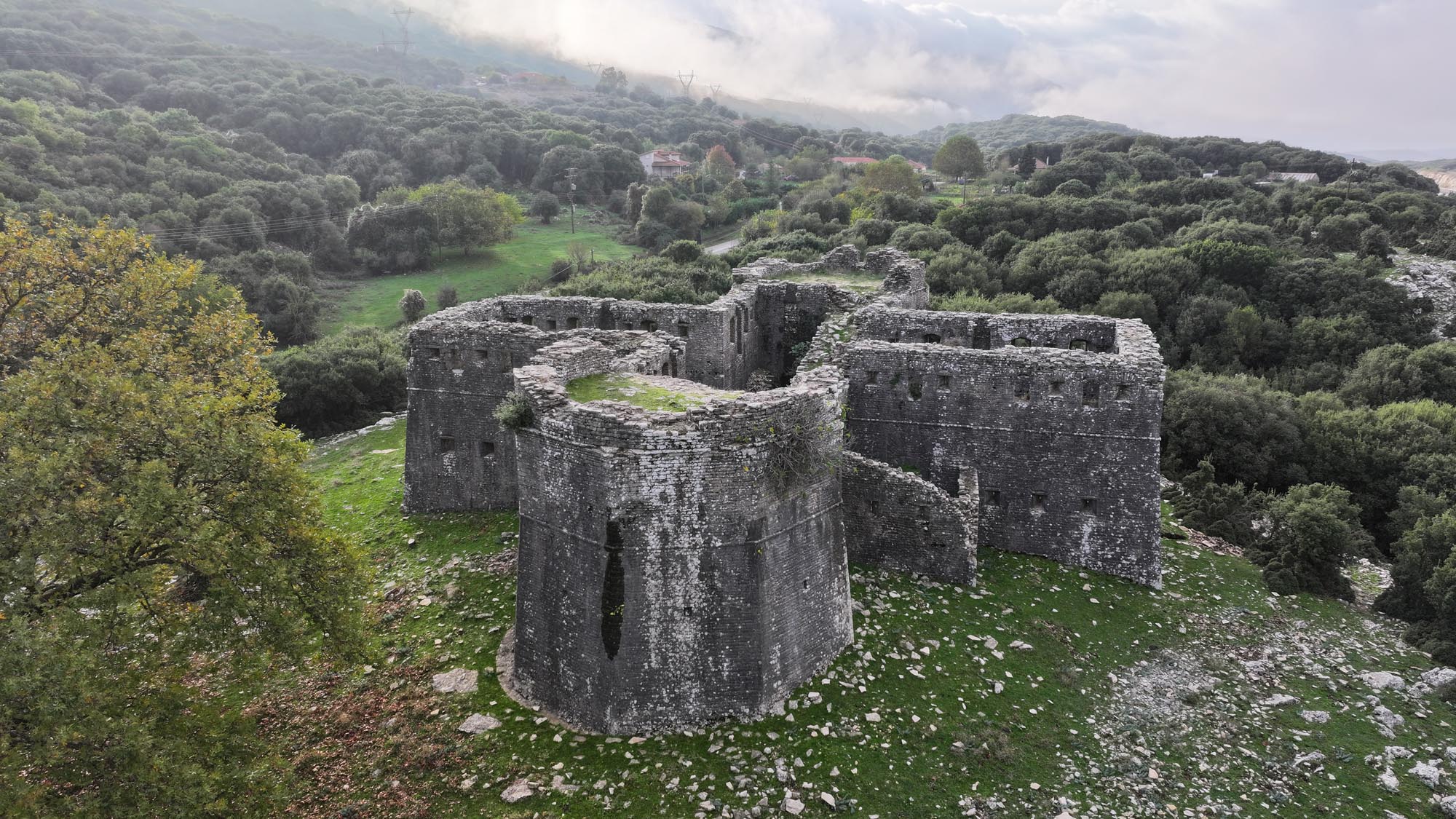
Pente Pigadia Fortress stands on a rocky hill, roughly midway along the old mountain route connecting the urban centres of Arta and Ioannina. Today, it looms over the modern Ionia Odos motorway. The site on this mountain pass to the Ioannina Plain was a stop on the old mule route. It had plenty of water – drawn from the five wells (pente pigadia in Greek) from which place gets its name – and a khan, that is, an inn where travellers could rest and stock up on supplies.
ΑΠΟ ΤΟ ΠΑΡΕΛΘΟΝ ΣΤΟ ΠΑΡΟΝ
The area once housed two forts. The oldest, of which a few remains survive, was constructed around the mid-18th century by Ahmet Kurt Pasha, derven-agas (general keeper of passages) of Epirus and Thessaly. In the early 19th century, this fortress was destroyed. The remaining fortress was built in the 19th century, at a short distance south of the original one. Its construction is often attributed to Ali Pasha of Ioannina, as part of his programme to improve safety on the road network of his territory.
The fortress’ strategic position, from where it controlled access to the Ioannina Plain, made it the scene of many battles during the 19th century. On 15–17 September 1821, an army of Souliots occupied the fortress and repelled the Ottoman troops of Hurşid Pasha, while during the failed uprising of the Greeks of Epirus in 1853–1854, as well as during the Greco-Turkish War of 1897, there were battles with the Ottomans in the area. Finally, during the First Balkan War, on 24–30 October 1912, Greek troops repelled an attack by the Ottoman army. After the liberation of Ioannina on 21 February 1913, and the incorporation of the region into the Greek state, the fortress lost its strategic significance and was abandoned.
THE FORTRESS
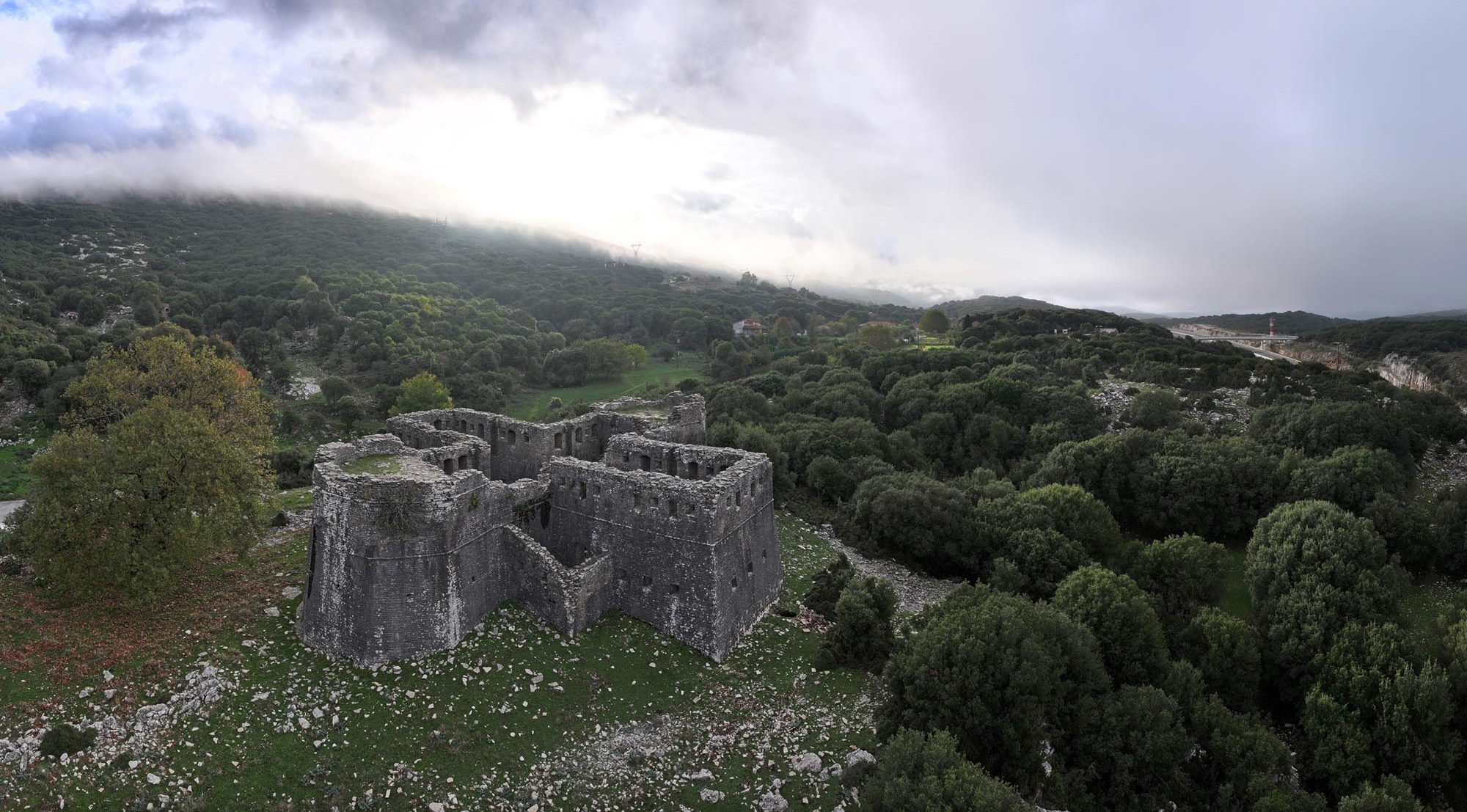
The small, two-storey fortress has a cross-shaped plan, rare in Greek fortification architecture. The arms of the cross are oriented towards the four cardinal points. On the north-south axis, they end in hexagonal bastions. The fortress’ only entrance, with an elaborate frame, is located on the eastern arm. Above the gate is a slab, between two relief crescents, that probably once bore an inscription.
The ground floor of the fortress served as a storage area and for auxiliary uses, with no openings other than gun slits. The garrison lived on the upper floor, which had windows for better lighting, fireplaces for heating and gun slits for defence. The movement of solders, weapons and supplies between the ground floor, upper floor and the bastion areas was facilitated by ramps. According to an 1896 illustration, the fortress was covered with a timber roof, except for the bastions.
Pente Pigadia Fortress stands out among Ali Pasha’s fortifications due to its distinctive form and elaborate construction. For this reason, some experts suggest that the structure could be dated to the second half of the 19th century.