
Patras
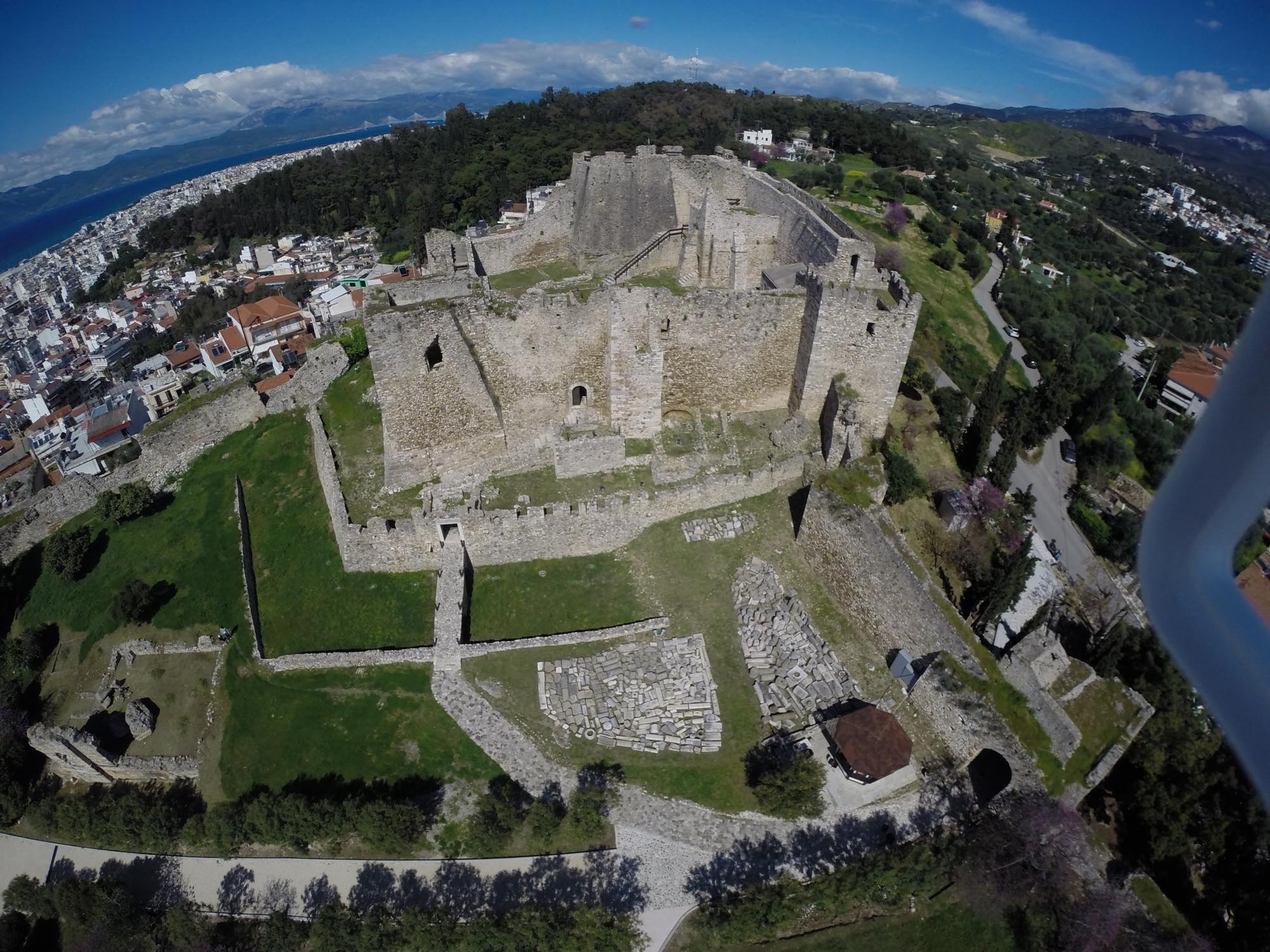
Patras Castle is located on a hill east of the city, at the foot of the Panachaiko Mountains, approximately 500 m from the sea. Its history has been inextricably linked with that of Patras since ancient times, and its significance for the city and the wider region is evidenced by its continuous use up to World War II. It was constructed in the second half of the 6th century on the ruins of the ancient acropolis, and its location was particularly strategic for the defence of the area, especially during the centuries that followed, which were marked by raids of barbarian tribes that intensified with the arrival of the Slavs and Avars.
ΑΠΟ ΤΟ ΠΑΡΕΛΘΟΝ ΣΤΟ ΠΑΡΟΝ
According to Pausanias, the city was founded by the Spartan Patreas, who united seven rural settlements and named the new city after himself. Due to its strategic geographical location, Patras developed into a commercial centre in antiquity. The acropolis, located where the current castle now stands, formed the heart of the city, which flourished particularly during the Roman period. In the 1st century, it was Christianised by Andrew the Apostle, who was martyred in Patras and subsequently became its patron saint and protector.
Throughout most of the Early Byzantine period, Patras remained an important city with a flourishing economy and trade. The 6th century marked a turning point in its history, as two major earthquakes (in 521 and 551, respectively) and a series of barbarian raids caused widespread destruction and a sharp decline in population. The construction of Patras Castle on the site of the ruined acropolis also dates to this period, following the earthquake of 551. The existence of the castle in 805 is confirmed by the written testimony of Constantine VII Porphyrogenitus, who described the attack of the Slavs and Saracens and the siege of the city. In the 9th century, Patras was rebuilt and emerged as an important commercial hub on the sea route connecting the Adriatic Sea to the Corinthian Gulf.
In 1205, the Franks, under Geoffrey of Villehardouin, occupied the city, which was granted to William Aleman as a barony, falling under the Principality of Achaia, with Andravida being its seat. During this period, Patras became the seat of a Latin archbishop, while the castle was reinforced and expanded. In the early 15th century, due to the threat of Ottoman raids, the Barony of Patras was leased to the Venetians (1408–1413, 1417–1419), who made essential interventions and additions to the castle.
In 1427, Thomas Palaiologos took control of the Barony of Patras, though not of the city itself, which was conquered after a long siege by his brother, Constantine Palaiologos, in 1430. In 1458, the city fell to the Ottomans, who repaired the castle, now the administrative centre of the city, while the military defence of the region was transferred to Rio Fortress, erected in 1499. During the Ottoman period, the city’s size was considerably reduced, yet it remained an important commercial hub in the Peloponnese.
In 1687, Patras once again fell to the Venetians and became the capital of one of the four provinces of the Republic of Venice. In 1714, a powerful earthquake destroyed both the city and the castle. The following year, the Ottomans recaptured the city but they left the castle largely unfortified. The castle suffered significant destruction during the Orlov Revolt (1770), while its walls were severely damaged in 1785 by an earthquake and in 1811 by an explosion in a gunpowder storeroom. During the Greek Revolution of 1821 the city was looted and destroyed by Turkish-Albanian forces. In 1828, the castle surrendered to the French general Maison, who turned the city over to the Greek state. A few years later, all ancient and earlier structures within the castle were demolished so that it could be used as barracks and its inner enclosure as a prison. Since 1950, it has belonged to the Municipality of Patras, which transformed the levelled interior into a garden. In 1975, it was placed under the jurisdiction of the Ministry of Culture and has since operated as an archaeological site.
THE CASTLE
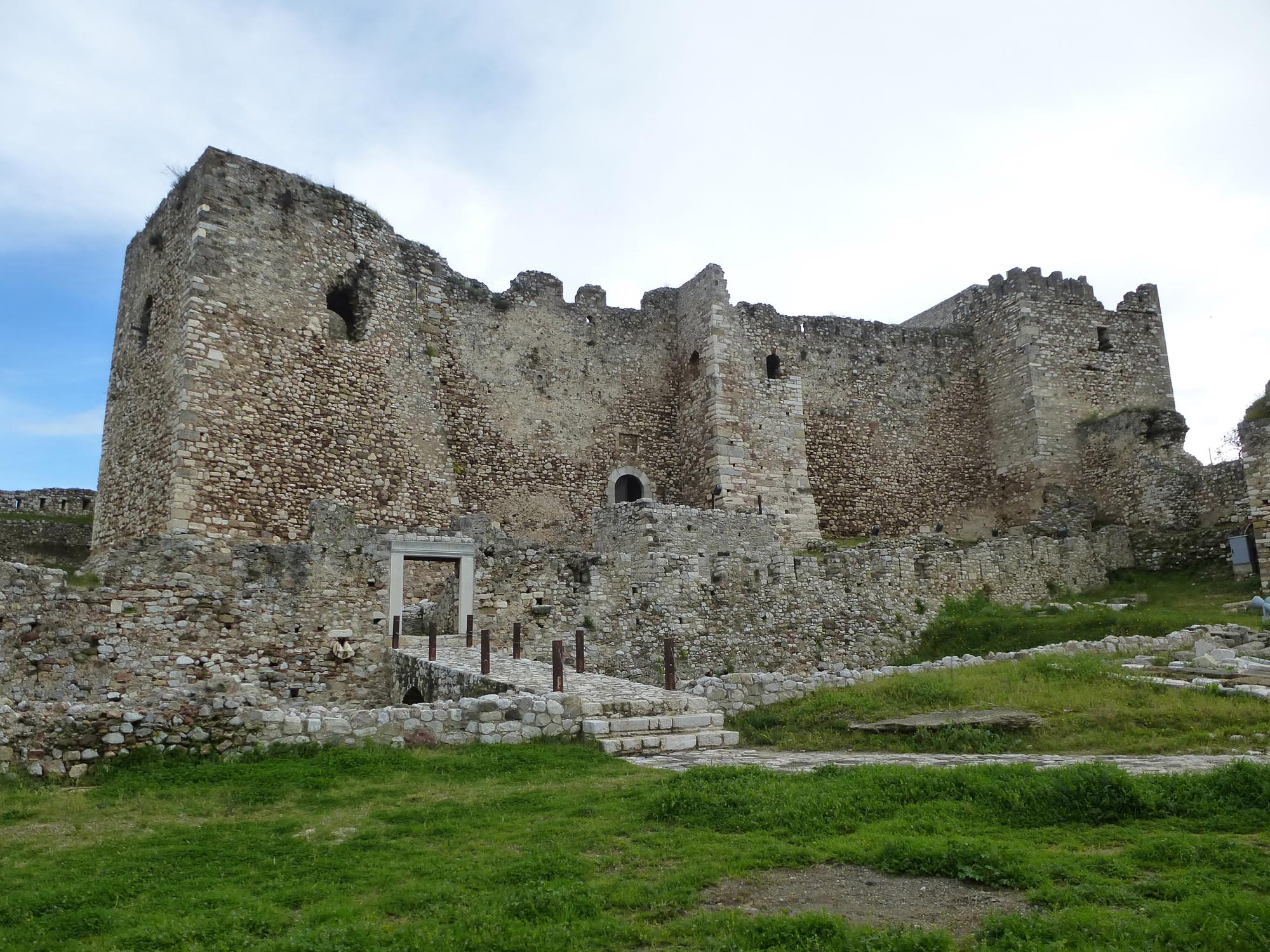
In its present form, Patras Castle has an irregular triangular shape and covers an area of about 2.2 hectares. It comprises an outer enclosure with towers and bastions from various periods, once protected by a deep moat, and an inner enclosure situated on a natural embankment in the northeastern corner. This inner section is reinforced by six towers, earning it the name Hexapyrgion (“six towers”). At the western edge of the outer enclosure stands a large circular Venetian bastion. The western and southern sides of the inner enclosure, where its only gate is located, are also bordered by a moat.
Traces of the castle’s various construction phases are preserved in its masonry and overall form, reflecting the repairs and additions made by successive conquerors. Elements of the original 6th-century construction, characterised by the extensive use of ancient building materials, are still visible today, primarily along the northern and in several parts of the southern wall. During the Frankish period, the southwestern part of the outer enclosure was reinforced with square towers, while the configuration of the inner enclosure is believed to date from this time.
In the 15th century (1408–1413, 1417–1419), the Venetians repaired the walls and may have reshaped the moats. They also built the strong western circular bastion, which features a roof terrace to facilitate the movement of cannons and arched embrasures around its perimeter. To further reinforce its defence, a low bulwark was built in front of the bastion.
When the Palaiologos family occupied the castle (1430–1458), they erected two square towers in the outer enclosure, one in the northeastern corner and another in the middle of the southern side. On the outer facade of the latter, the torso of a statue and a male head from the Roman period were embedded in a recess, creating a strange-looking statue. This statue, believed to represent Zeus or Patreas, was attributed with mythical properties. In local folklore, it was believed to be a ghost called Patrinela, a woman transformed into a man who protected Patras from epidemics and raids. According to legend, Patrinela’s mournful wail could be heard throughout the city whenever a prominent citizen passed away.
The longest-serving masters of the castle, the Ottomans, are credited with numerous repairs and additions, such as the battlements in their current form and the batter that reinforced the walls’ defences. However, their most significant constructions, such as the polygonal bastion of the southeastern side, the circular tower in the middle of the northern side of the outer enclosure, the polygonal bastion of the inner enclosure, and the configuration of the castle’s main entrance, along with its protection with a tower-like structure, seem to have been built in the early years of their rule. After 1500, when the defence and safety of the city were transferred to Rio Fortress, the castle became an administrative centre, with public buildings, mosques and baths erected within its walls.
THE GATES
The main entrance to the castle is located on its eastern side. It is vaulted and set within a robust tower. While its interior retains elements of Frankish architecture, the overall defensive structure, featuring the tower and the successive openings, was the work of the Ottomans. A second gate is located in the southwestern part of the outer enclosure.
The entrance to the inner enclosure is situated on its southern side and is accessed through an arched bridge spanning the moat. A rectangular tower, now preserved at a reduced height, protected the ascent staircase and the gate, which led to the inner enclosure courtyard through a second inner staircase.
THE INTERIOR
Inside the castle today, no buildings remain, as they were demolished in the mid-19th century. The only building standing to some height is a mosque in front of the moat of the inner enclosure.
Today, the castle has an information area with materials on the works implemented by the local Ephorate of Antiquities, including video projections, bilingual information boards and a tactile map.