
Parga
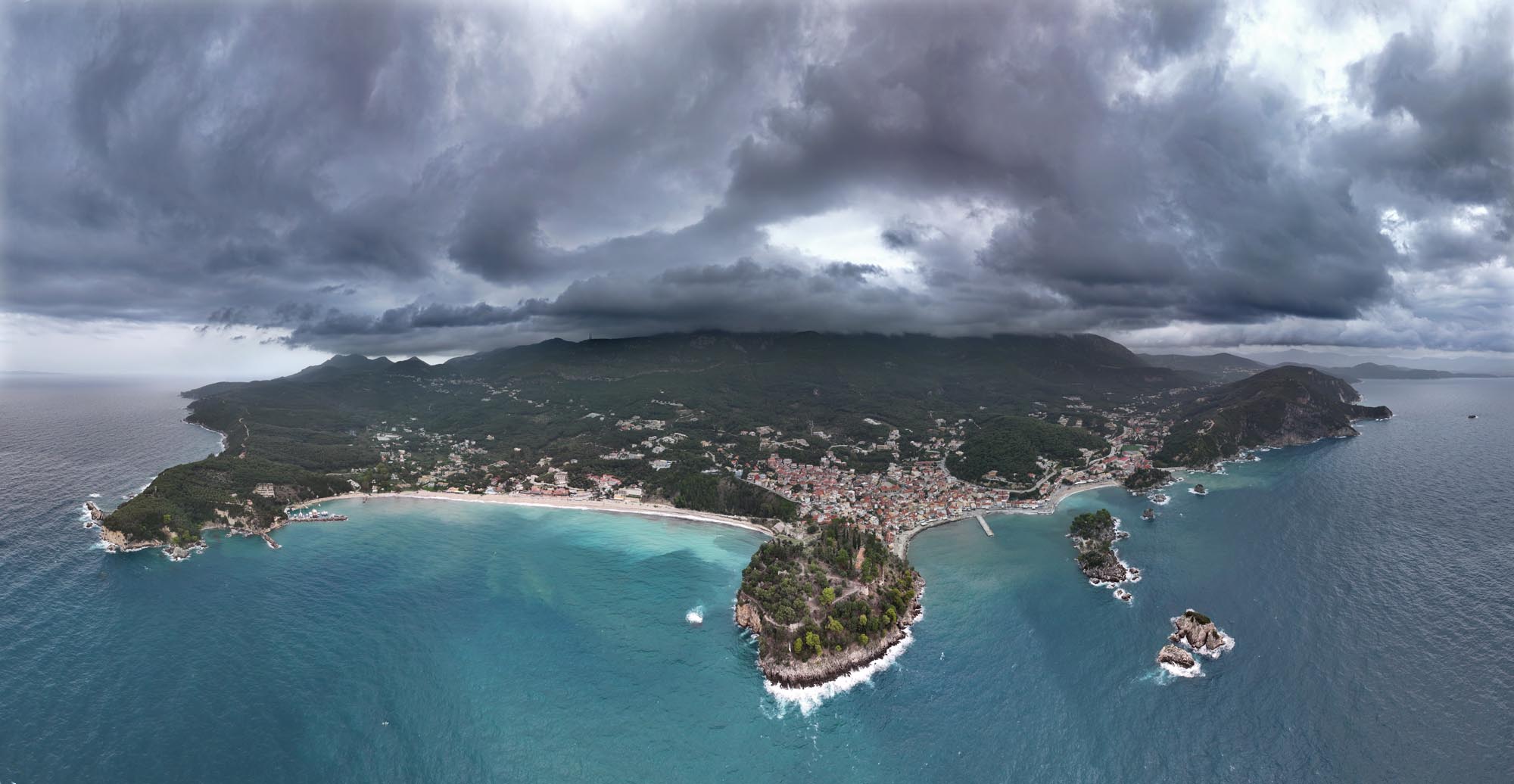
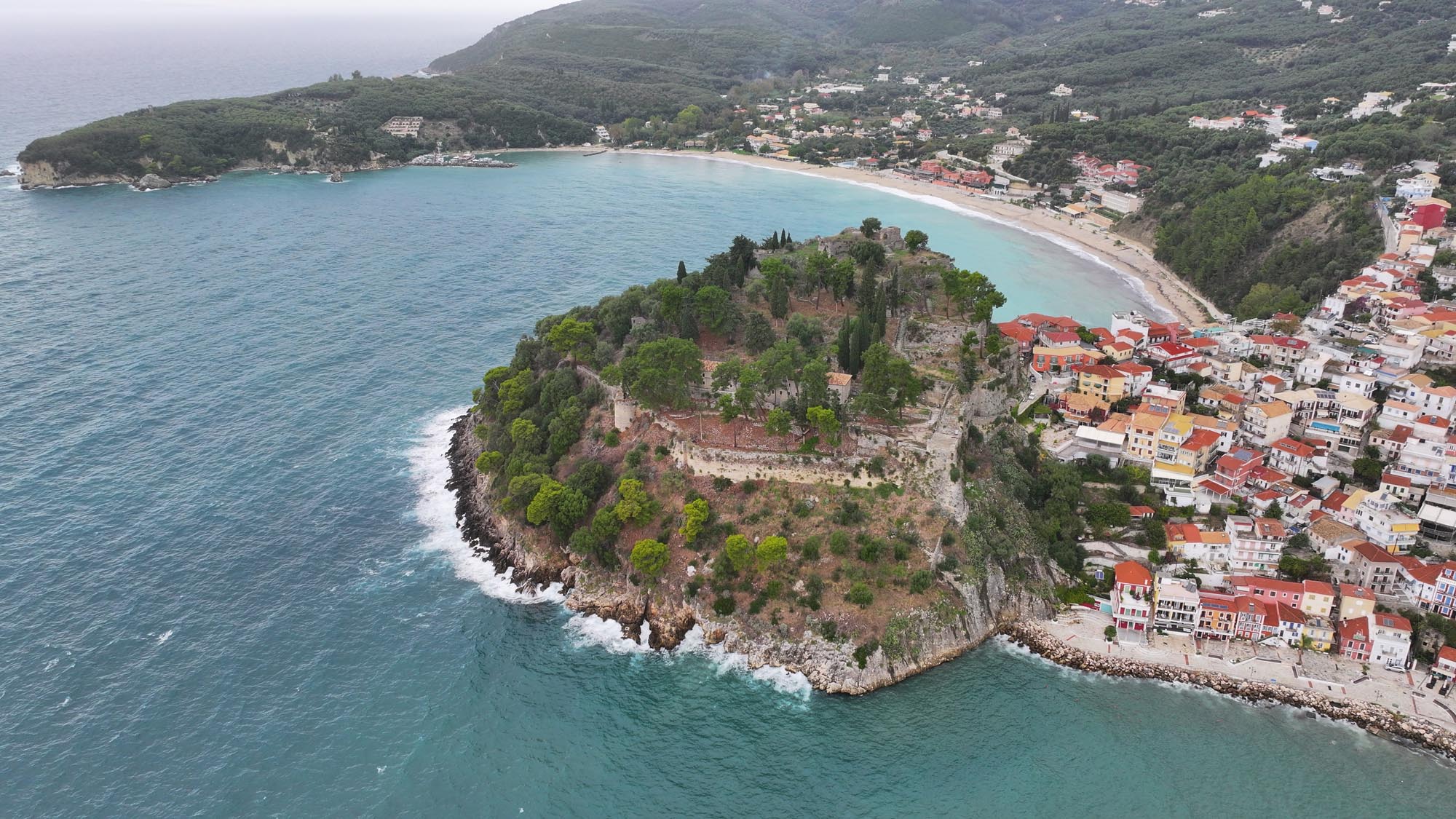
For centuries, Parga Castle has stood on the small rocky peninsula between the entrance to the harbour of the modern city and Valtos beach, overseeing the Ionian Sea and protecting the city from both land and sea. The remains of an ancient wall on the western side of the castle belong to the oldest fortifications of the site, in the wider area of which ancient Toryni is located. The name Parga first appears in written sources in the early 14th century, an indirect indication of the existence of the castle, though no archaeological evidence confirms this.
ΑΠΟ ΤΟ ΠΑΡΕΛΘΟΝ ΣΤΟ ΠΑΡΟΝ
At the end of the same century, amid political turmoil and conflict, Parga’s inhabitants, following the example of their Corfiot neighbours, sought protection from the Republic of Venice. In 1401, they signed a treaty that made Parga a Venetian possession. The Venetians granted them privileges, transforming Parga into an important trading post and base for the Venetians, serving as the “eye and ear” of Corfu on the Epirus coast for the next four centuries.
The Ottomans occupied Parga in 1452, and two years later, in 1454, it returned to the Venetians, thanks to the mobilisation of the Pargians and Corfiots. At the same time, only small-scale fortification works were carried out due to lack of resources, even though the city feared an imminent attack by the Ottomans, who had already burned the castle twice by the early 16th century. In 1537, the Ottoman fleet under Hayreddin Barbarossa Parga destroyed Parga, but the Venetians reconstructed it in 1567. In 1571, the Ottoman fleet destroyed it again during raids on Venetian possessions in the Ionian Sea shortly before its defeat in the naval Battle of Lepanto the same year. The Venetians quickly restored and expanded the castle and, in the 17th century, Parga entered a period of prosperity, with the settlement growing beyond its walls.
After 1797 and the dissolution of the Republic of Venice, Parga went through a period of instability and insecurity. In 1797, Parga passed to the French, then in 1800 formally to the Ottomans, but under Russian protection. In 1807, it returned to the French, and finally, in 1814, it passed to the British. These successive changes of rulers and protectors prevented Parga from falling into the hands of its greatest enemy, Ali Pasha of Ioannina, who had already secured all the other Venetian bases on the Ionian coast by 1817. However, in that year, the British governor of the Ionian Islands, Thomas Maitland, signed a treaty ceding control of Parga to Ali Pasha in exchange for a monetary settlement. Its residents were given the option to stay or leave and to be compensated for their properties. Shortly before the castle was handed over to Ali Pasha in 1819, most inhabitants left their homeland and took refuge in the Ionian Islands, mainly Corfu. The castle fell into disrepair and was gradually abandoned in the second half of the 19th century.
THE CASTLE
The castle’s current form is mainly due to the Venetians and dates to after 1571. Its fortifications are irregular, following the contours of the hill. The strong outer walls are built along the edges of the rocky slopes, taking advantage of its natural defences. Historical sources indicate that the castle was once protected by a moat. In 1819–1820, Ali Pasha erected a strong wall, reinforced with a polygonal bastion, at the highest point of the hill, creating an internal autonomous fortress, the castle’s citadel.
An uphill path leads to the gate, on the southeastern side the fortification. This accessible and, therefore, vulnerable part of the castle is reinforced by a semicircular tower-bastion. Above the arch of the gate is an inscription bearing the year 1707 and the name of Parga’s governor, Markos Theotokis. A second gate leads to the castle interior through a narrow, vaulted passage. Above this gate, an inscription refers to Parga’s dependence on Corfu. A little higher is an immured relief bearing the symbol of Venice, the winged Lion of Saint Mark.
Barracks were built in the early 19th century north of the internal gate. The interior of the castle is arranged on various levels that follow the natural incline of the hill. The settlement, of which only ruins survive, extended across the western, northern and eastern parts of the hill. Narrow paths wind through the site and lead visitors to the fortification’s last line of defence, the citadel. Around the site are the remains of nine churches. Among them, the one west of the citadel gate is likely the former parish church of the city, dedicated to Saint Spyridon.
THE CITADEL
The monumental citadel gate is flanked by two rectangular frames, featuring a two-headed eagle and inscriptions bearing the year 1820 and the name of Ali Pasha. Inside the wall, two wings of vaulted semi-basement rooms separate the citadel from the castle. These spaces were intended for the garrison, as shown by the fireplace niches they preserve, and for storing essential supplies. A portico runs through both wings, linking the strong bastion and the interior of the citadel and facilitating the movement of the garrison’s troops. At the highest point of the citadel stands a large two-storey complex, Ali Pasha’s saray, which included residential areas, cisterns, a small bath (hammam) and a mosque.