
Mila
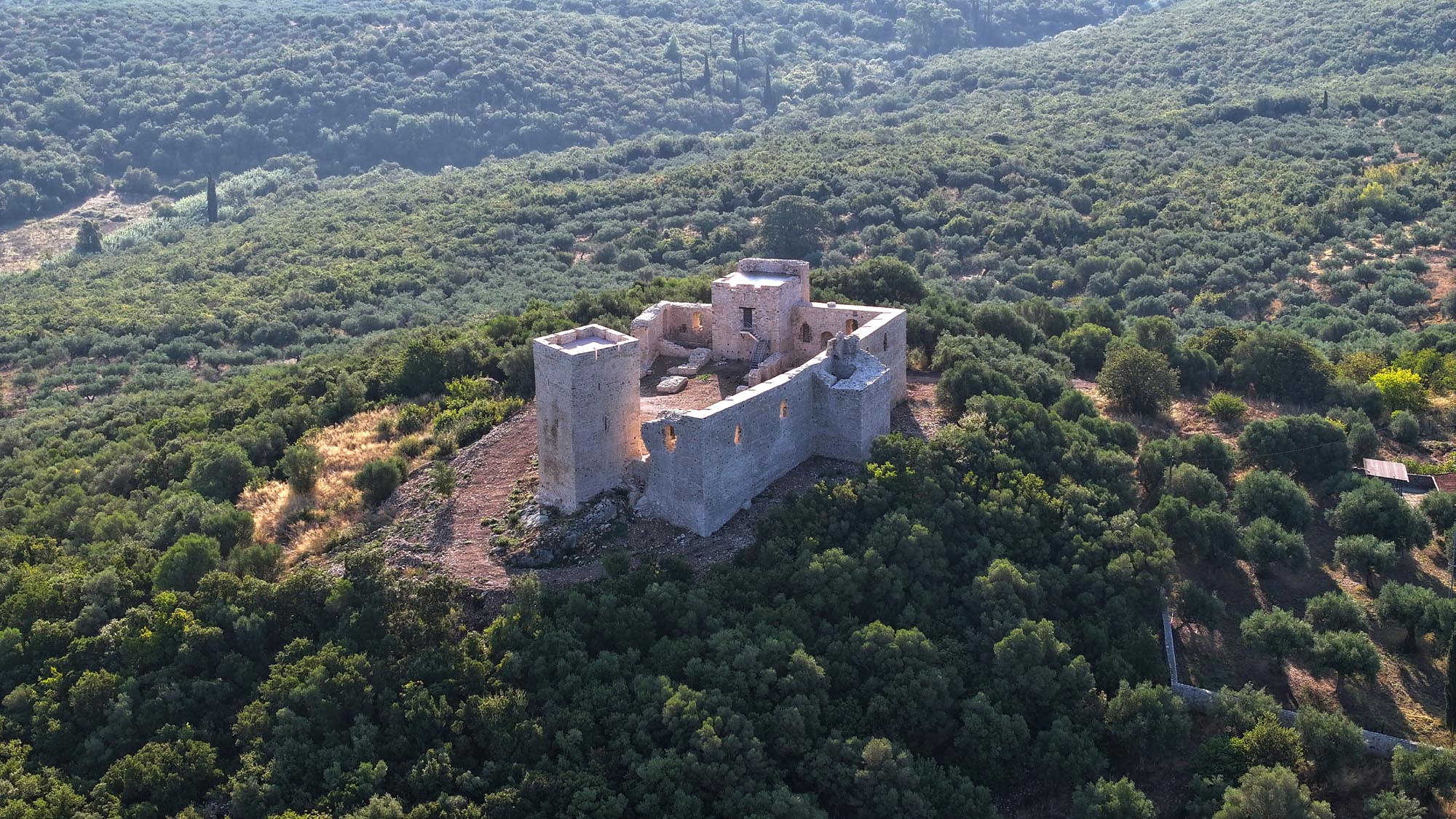
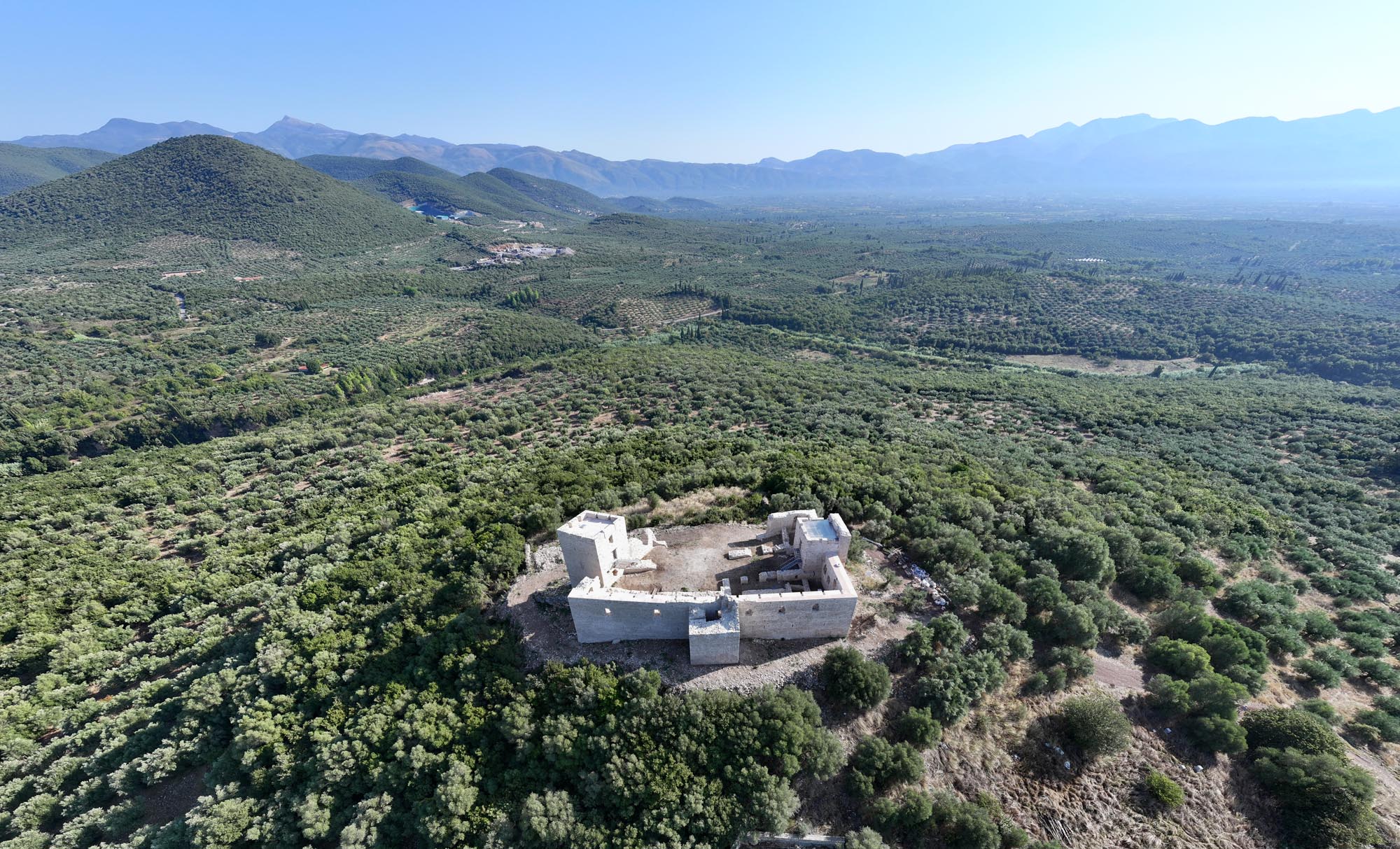
The castle stands atop a low hill near the small settlement of Kastro, northeast of the modern village of Mila. Its location provides a commanding view of northern Messenian Plain and oversees the mountain passes connecting Messenia to Arcadia and the primary route between the Messenian Plain and Kyparissia.
ΑΠΟ ΤΟ ΠΑΡΕΛΘΟΝ ΣΤΟ ΠΑΡΟΝ
The castle has been identified as the renowned Châteauneuf, or New Castle. It was built and inhabited by Princess Isabelle of Villehardouin during her sole rule over the Frankish Principality of Achaia. Its construction likely commenced immediately after the death in 1297 of her husband, Florent of Hainaut, to counteract the increasing raids of the Byzantines on the principality’s territories in Messenia. The base of the raids was Gardiki Castle, located near the modern village of Tourkolekas, on the Makryplagi Pass – the main route between Messenia and Arcadia until the 20th century that the castle hill of Mila overlooked.
By 1805, Mila Castle was abandoned, as noted in the memoirs of Greek revolutionary leader Theodoros Kolokotronis, who referred to it as the Palaiokastro (Old Castle) of Mila. However, the precise date of its abandonment remains unknown. Records from the French scientific mission in the Peloponnese in 1828–1829 state that the castle, referred to as Palaioklefto, was fortified and used for the last time by the Ottomans during the Greek Revolution.
THE CASTLE
Mila Castle belongs to the category of small fortresses built in the Peloponnese after the 13th century at key locations, such as border crossings and roads, to reinforce their protection and control the local population. Most of these castles were abandoned after the Ottoman conquest of the Peloponnese in 1460. However, Mila’s dimensions and distinctive architectural features afford it a special place in its category. Indeed, it has been suggested that, apart from being a defensive stronghold, it served as the castle-residence of a powerful feudal lord.
The fortification of the hill consists of two enclosures. The outer enclosure surrounded the most vulnerable northeastern side of the hill but only its foundations survive. It was reinforced with a semicircular tower in the centre of its northeast side. This enclosure also served as a bulwark for the inner fortress gate and probably included a small settlement.
The inner enclosure has an elongated quadrilateral ground plan. The entrance gate, no longer extant, was on the northeastern side. The enclosure is reinforced by three four-sided towers in the middle of its southern, eastern and western sides, with the western tower being the best preserved.
Along the two long sides of the inner enclosure, wings were constructed to provide living quarters and enhance the fortress’ defences. The two-storey south wing still stands while only some remnants of the north wing remain.
The upper floor of the south wing consisted of two spacious, timber-roofed living halls illuminated by arched windows. The larger hall has a large fireplace and a latrine. The corresponding ground floor rooms in the same wing probably served defensive and storage uses. Adjoining the eastern tower, a large rectangular timber-roofed chapel stood in the southeastern corner of the enclosure.
The castle’s present form is the result of extensive restoration efforts undertaken by the Ephorate of Antiquities of Messenia.