
Kiafa
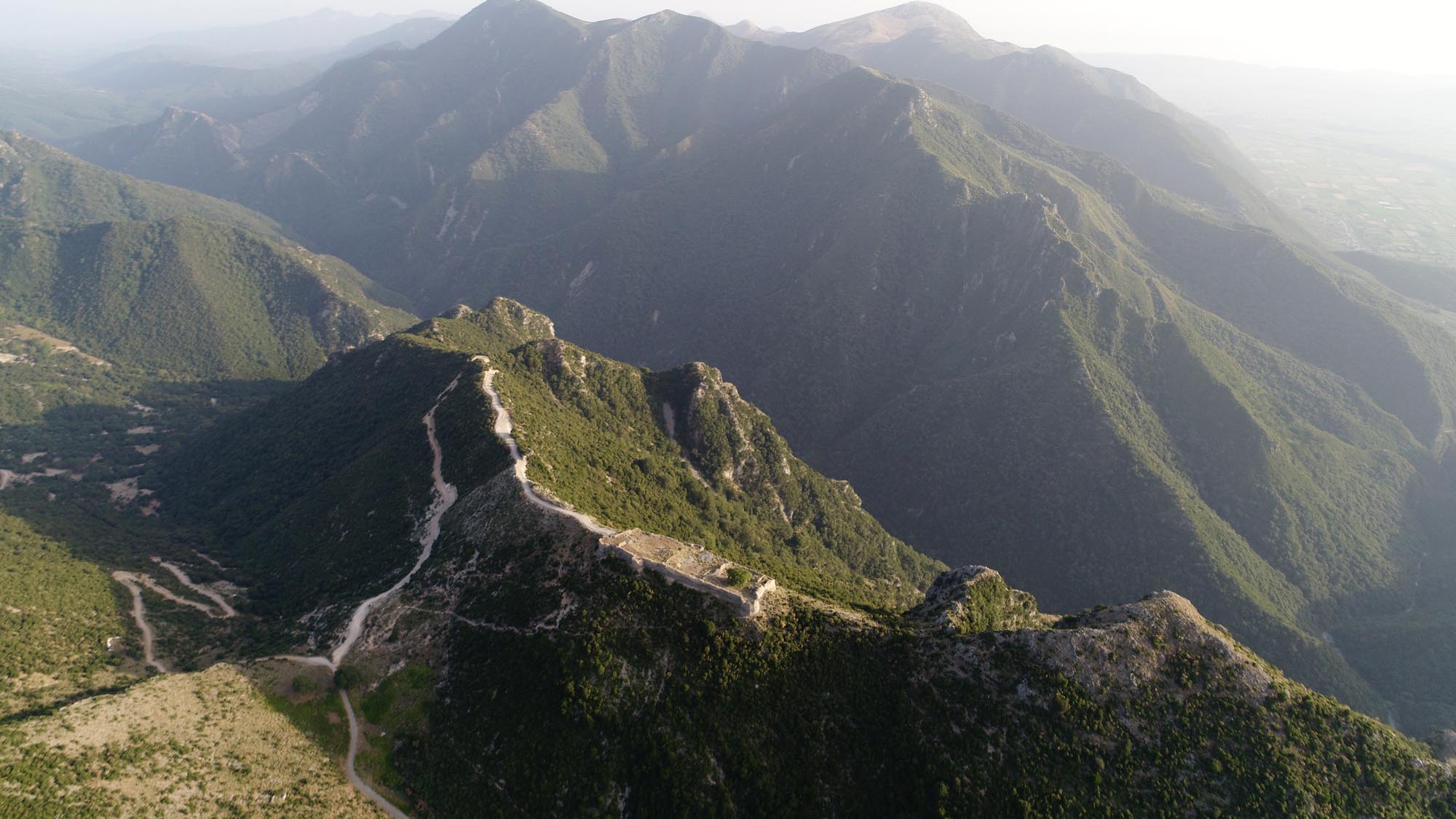
The naturally fortified castle, located atop a steep hill above the settlement of Kiafa, offers a commanding view of the Souli Plateau and Acheron Valley. This is the largest fortification project of Ali Pasha of Ioannina in the area of Tetrachori (literally “Four Villages”), as the four settlements (Souli, Kiafa, Samoniva, Avarikos) that make up the historical area of Souli are known. This location served as a refuge for the people of Souli during the successive unsuccessful campaigns of the Ottomans against them during the 18th century. It is possible that the site of the present-day castle was previously occupied by rough fortifications of the Souliotes (i.e., the people of Souli), of which no material remains survive today.
ΑΠΟ ΤΟ ΠΑΡΕΛΘΟΝ ΣΤΟ ΠΑΡΟΝ
The castle was built by Ali Pasha of Ioannina shortly after the final capitulation of the Souliots in December 1803. After a long siege, they were forced to surrender their settlements (Souli, Kiafa, Samoniva, Avarikos)to Ali Pasha and abandon their lands. The main reason for the erection of the castle was to prevent the Souliots from returning to the area. When the English traveller William Martin Leake visited it in 1805, accompanied by “Peter of Korytzá” (Korçë), Ali Pasha’s chief architect, he found the castle to be still under construction.
In 1820, Ali Pasha formed an alliance with the Souliots to strengthen his military force against the sultan’s army. In return, he returned Kiafa and their old lands, which he had taken from them in 1803. The Souliots successfully defended the area and remained in the castle even after Ali Pasha’s death. However, in 1822 they were besieged by the sultan’s troops and forced to surrender and leave Souli once more.
THE CASTLE
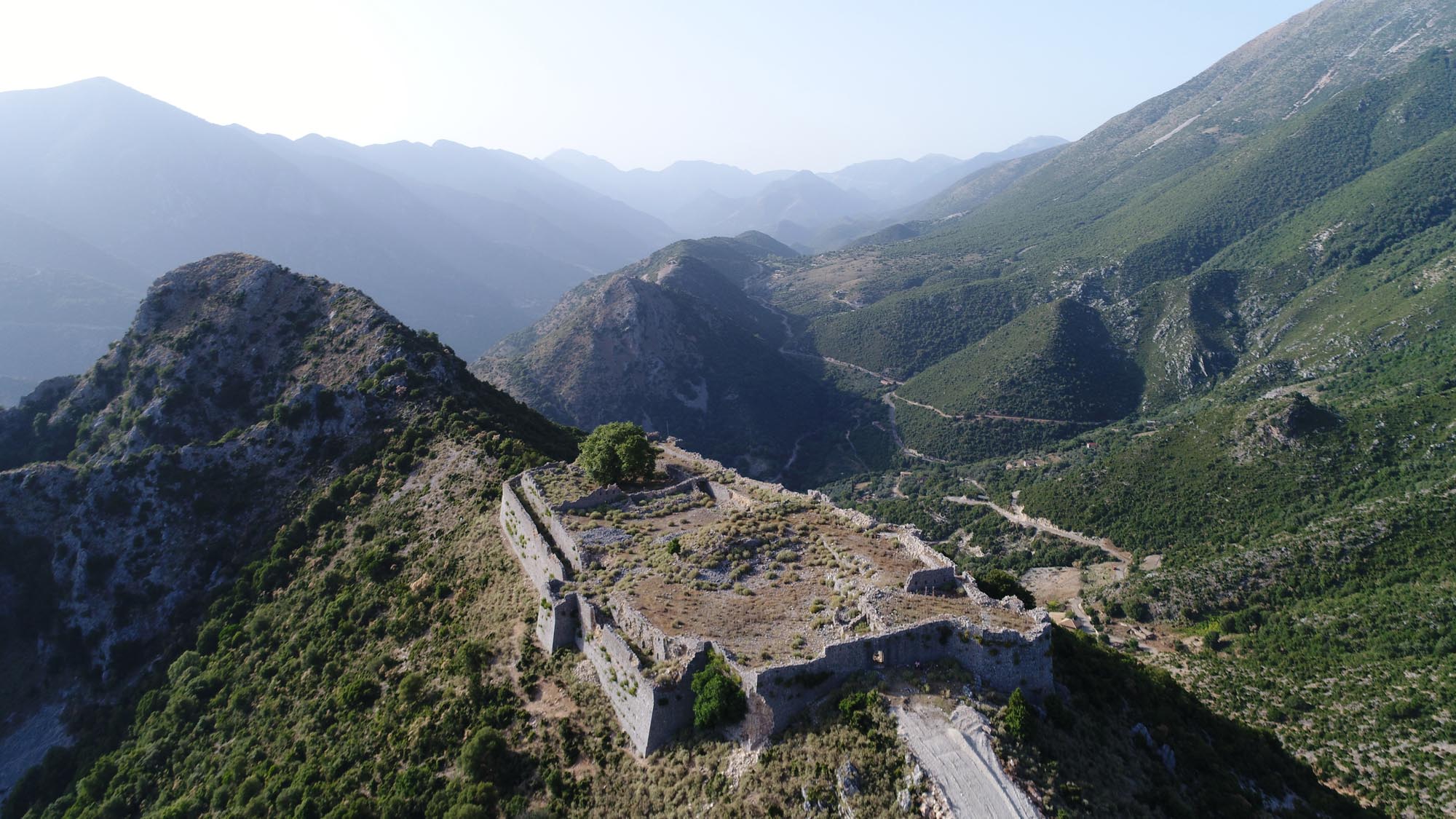
The fortress is located in the central part of the hilltop, with its fortifications perfectly adapted to the terrain. It has an irregular rectangular ground plan. On its two long sides, the southwest overlooks the steep slope towards the Acheron River, while the northeast faces the settlements of Souli. This later side, the main active front of the castle, was reinforced with two polygonal bastions at its ends and a circular one near the middle, with cannon embrasures for larger artillery. The long southwestern side consists of two parallel defensive lines, creating a narrow courtyard set at a lower level than the rest of the castle. The courtyard is lined with rows of barrel-vaulted rooms, each with its own entrance, which were designed for storing supplies and protecting the civilian population during a siege.
The main gate of the fortress is located in the middle of its narrow southeastern side. It leads to the path connecting the hill with the settlement of Kiafa. A secondary gate, now destroyed, was located in the central part of the opposite narrow side.
Two transverse walls divide the interior of the castle into three areas: the area of the main entrance, the central part of the fortress and the northern bastion. Ali Pasha’s saray, of which little remains, was situated in the central area. Residential remains are visible in the areas near the main gate and the northern bastion.