
Kelefa
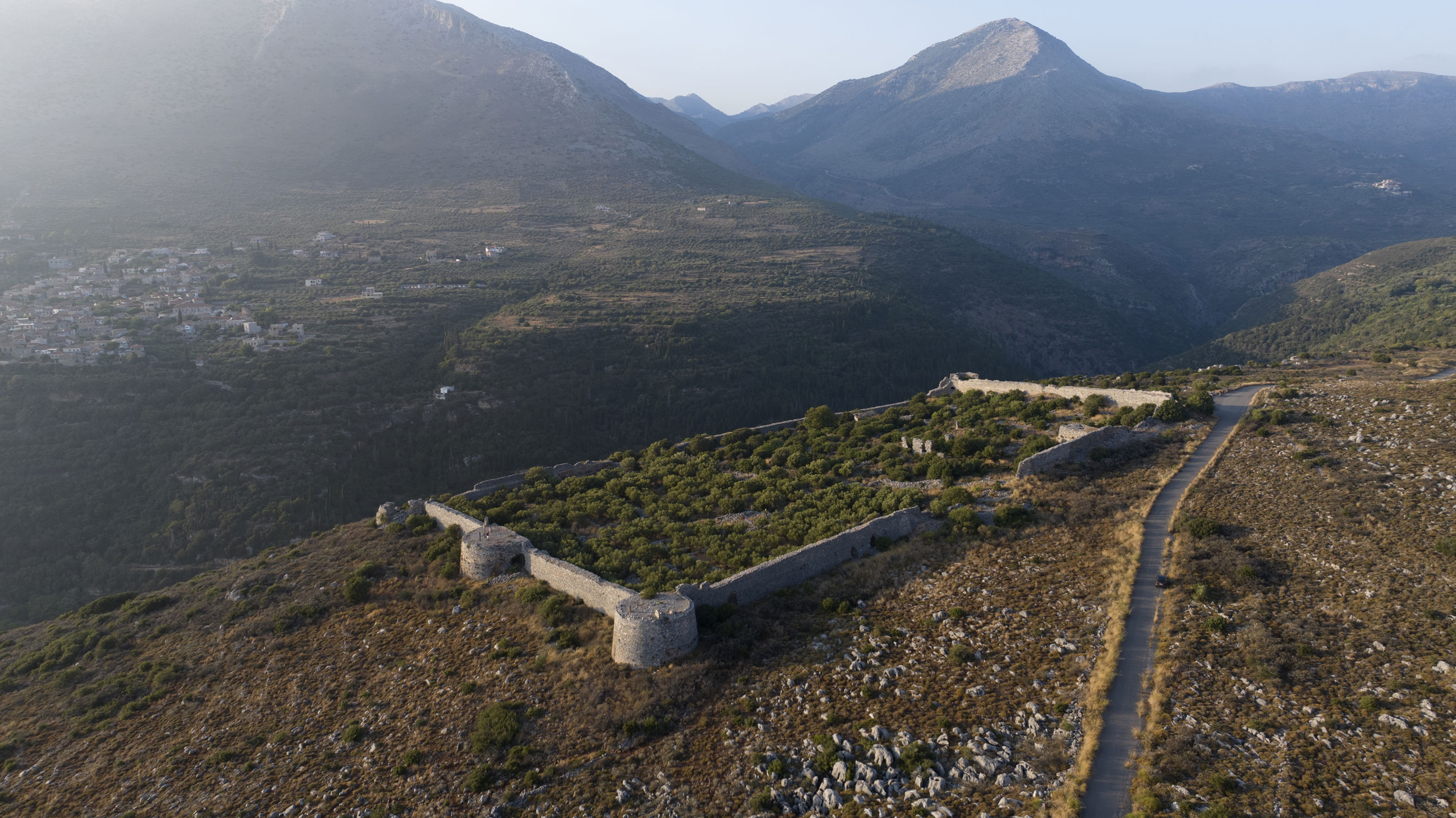
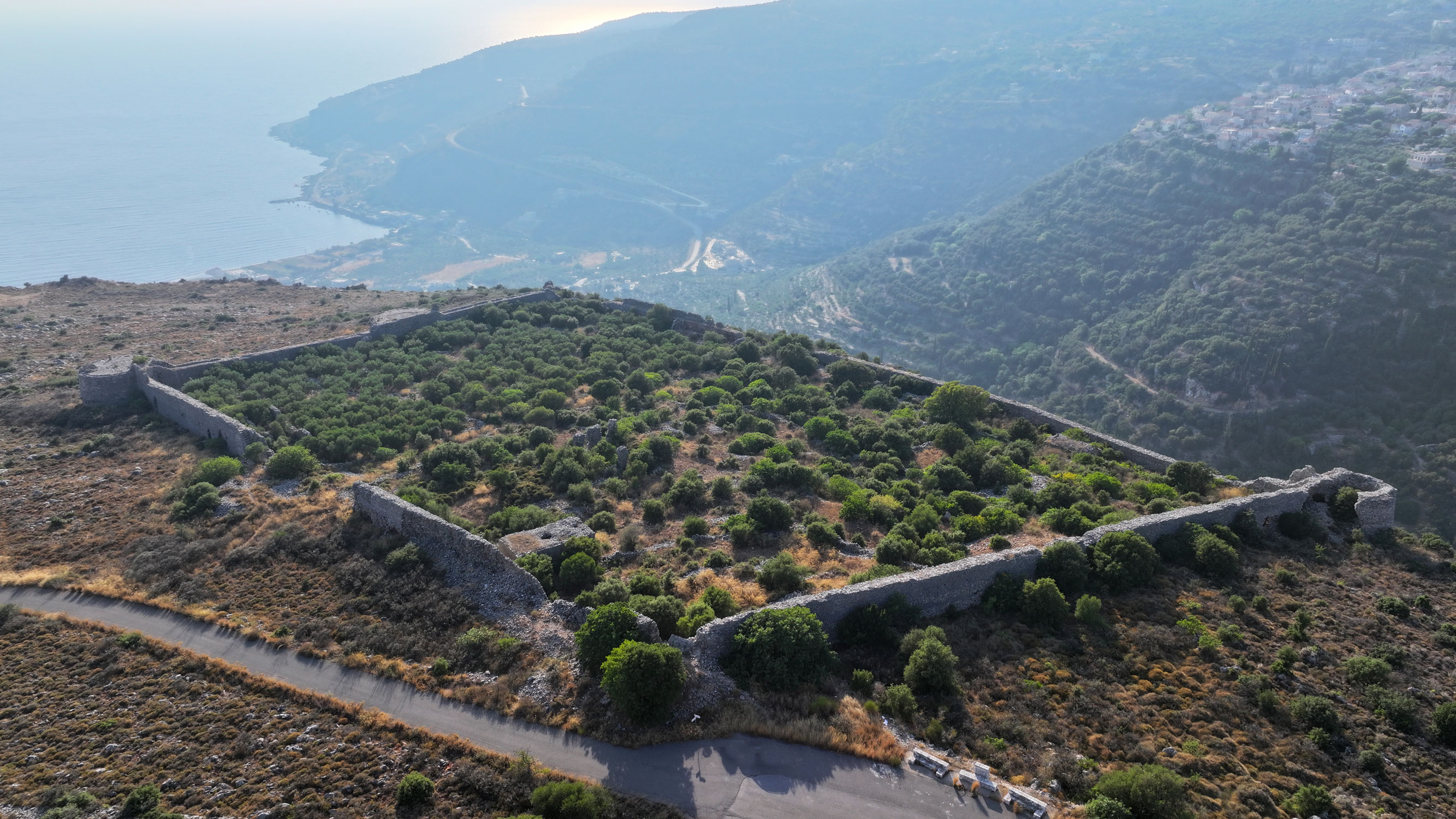
Kelefa Castle, strategically located at the western end of the central pass from the Gytheio area to southern Mani, offers a commanding view of the settlement of Oitylo and the natural harbour in its bay. Mylolangado, a deep and steep gorge, separates the fortress from Oitylo, a hub of revolutionary movements against the Ottomans during the 17th century. The castle’s primary purpose was to control the rebellious local population and prevent them from cooperating with the Western forces of the time, especially Venice.
ΑΠΟ ΤΟ ΠΑΡΕΛΘΟΝ ΣΤΟ ΠΑΡΟΝ
It was erected around 1670 by Grand Vizier Köprülü Ahmet Pasha (in office 1661–1676), immediately after the Ottoman conquest of Crete and the end of the Cretan War, also known as the Fifth Venetian-Οttoman War (1649–1669). It has also been associated with the activity of the Maniot pirate and adventurer Lyberakis Gerakaris. In 1686, a combined force of Venetians and Maniots, led by Francesco Morosini, besieged and occupied it, while the Ottomans unsuccessfully laid a siege to recapture it the following year.
During Venetian rule, although it was the seat of an official (proveditore), the castle was of secondary importance and was used only to control Oitylo harbour, a station on their commercial and military routes. In 1715, during the Seventh Venetian-Turkish War (1714–1718), it returned to the Ottomans, along with the rest of the Peloponnese. Having lost its strategic importance, it was abandoned.
THE CASTLE
The castle has a four-sided ground plan, its walls enclosing an area of about 2 hectares. Its northern walls overlook the steep Mylolangado Gorge, making them particularly difficult to access. The corners of the enclosure are reinforced by four circular bastions, of which only two survive, while another semicircular one is located in the middle of the western side. The castle gates, now destroyed, were located in the middle of the northern and southern wall at the ground level of the four-sided towers. Designed primarily to control and enforce authority over the local population, the castle has a simple layout, in contrast to the complex forts built in Europe during this period. It was not intended to withstand attacks from an organised regular army, which explains its narrow walls with rampart-walk, gun loops and cannon embrasures designed for short-range firearms.
Venetian documents mention the existence of a settlement within the castle, which had at least two merchant stores. Today, a well-preserved rectangular cistern is located near the southern side. A second rectangular building, the castle’s gunpowder storeroom, is located very close to the northern wall.