
Kassiopi
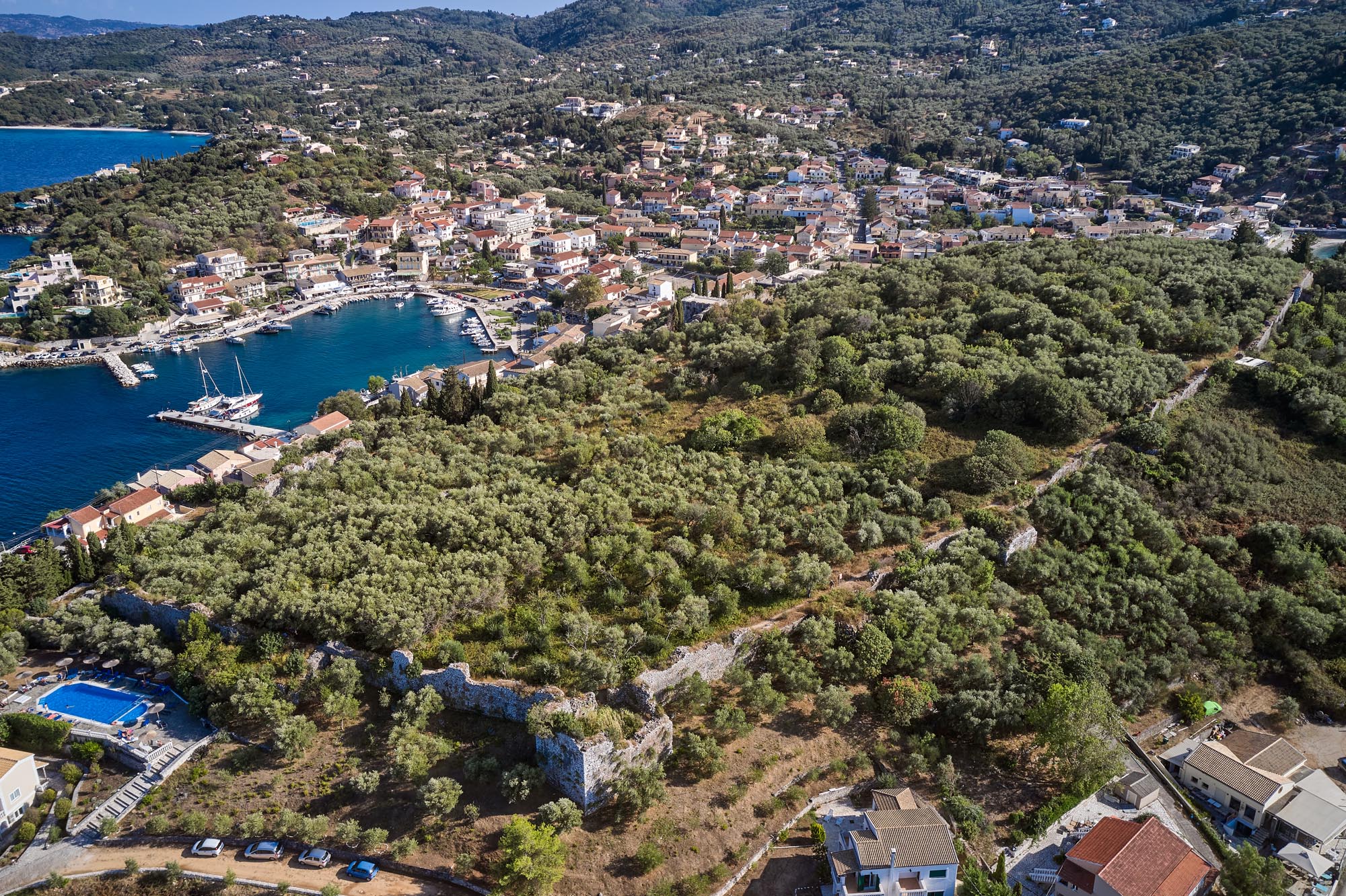
Built on a rocky peninsula in the seaside town of Kassiopi, on the east coast of Corfu, the castle of the same name is one of the three Byzantine castles, along with Aggelokastro and Gardiki, that still stand in the island’s countryside. Its position ensured control of the narrow sea passage between Corfu and the opposite coasts, as well as the protection of the city and the port. During the Roman period (1st–4th centuries), Kassiopi experienced great prosperity. Due to its safe harbour, it was the second most important city on the island and an important station in the maritime traffic between Greece and Italy.
ΑΠΟ ΤΟ ΠΑΡΕΛΘΟΝ ΣΤΟ ΠΑΡΟΝ
The castle has been dated to the late 12th century, when, as a result of the final loss of all Byzantine possessions in southern Italy, Corfu became the western border of the Byzantine Empire. However, another theory proposes an earlier construction phase in the 6th century, when residents of the city of Euroea in Epirus, fleeing barbaric invasions, settled in the area. Kassiopi Castle was permanently abandoned and deserted after the Ottoman raids of 1537 and 1571.
Before the Venetian conquest of the island and especially during the Venetian period, the harbour and town of Kassiopi frequently appeared in travel accounts, as it was a common stop for supplies. Especially from the 14th century onwards, the small church located southeast of the castle, dedicated to Panagia Kassopitra, became an important pilgrimage site, as mentioned in numerous pilgrim texts. According to their testimonies, the church housed a miraculous icon of the Virgin Mary, which at some point seems to have been attributed to Luke the Evangelist, along with an inextinguishable oil lamp whose oil was believed to cure fever and protect ships from rough seas. Many travellers also described Kassiopi Castle as abandoned or in ruins. In addition, they often recounted versions of a legend in which the city and castle were destroyed by a fire-breathing dragon.
THE CASTLE
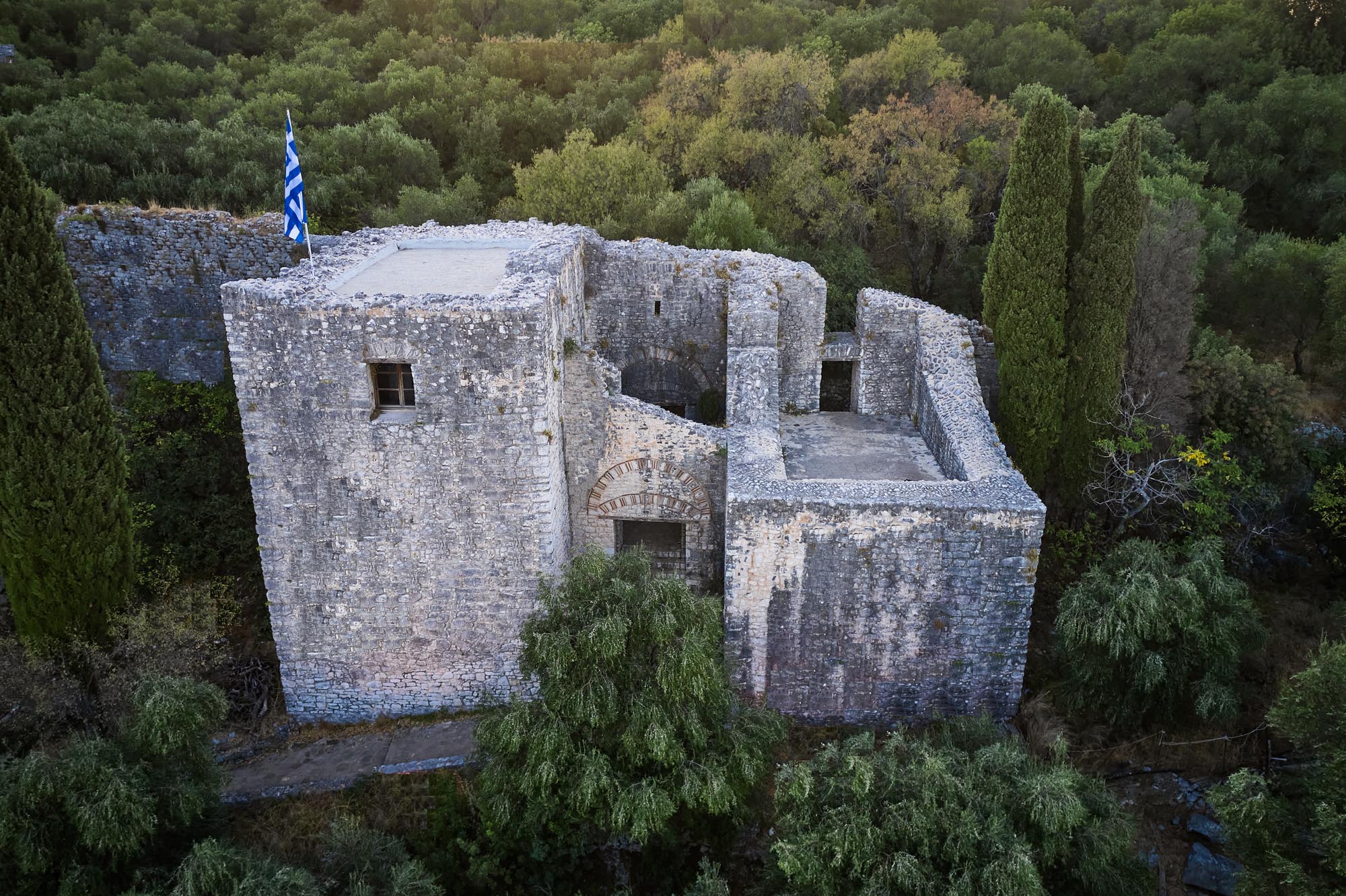
Kassiopi Castle retains the characteristic fortification features of the Byzantine period. Its walls follow the terrain and form an irregular quadrilateral layout with four sturdy, two-storey rectangular towers in the corners. In addition, the walls are reinforced with a series of seven rectangular and five semicircular towers, alternating along the four sides of the castle.
The main entrance of the castle opens into a recess on its eastern side and is protected by two strong rectangular towers. Two smaller postern gates, also covered by towers, open into the southwest and north sides. Today, the interior of the castle is overgrown with dense vegetation, with no visible building remains.