
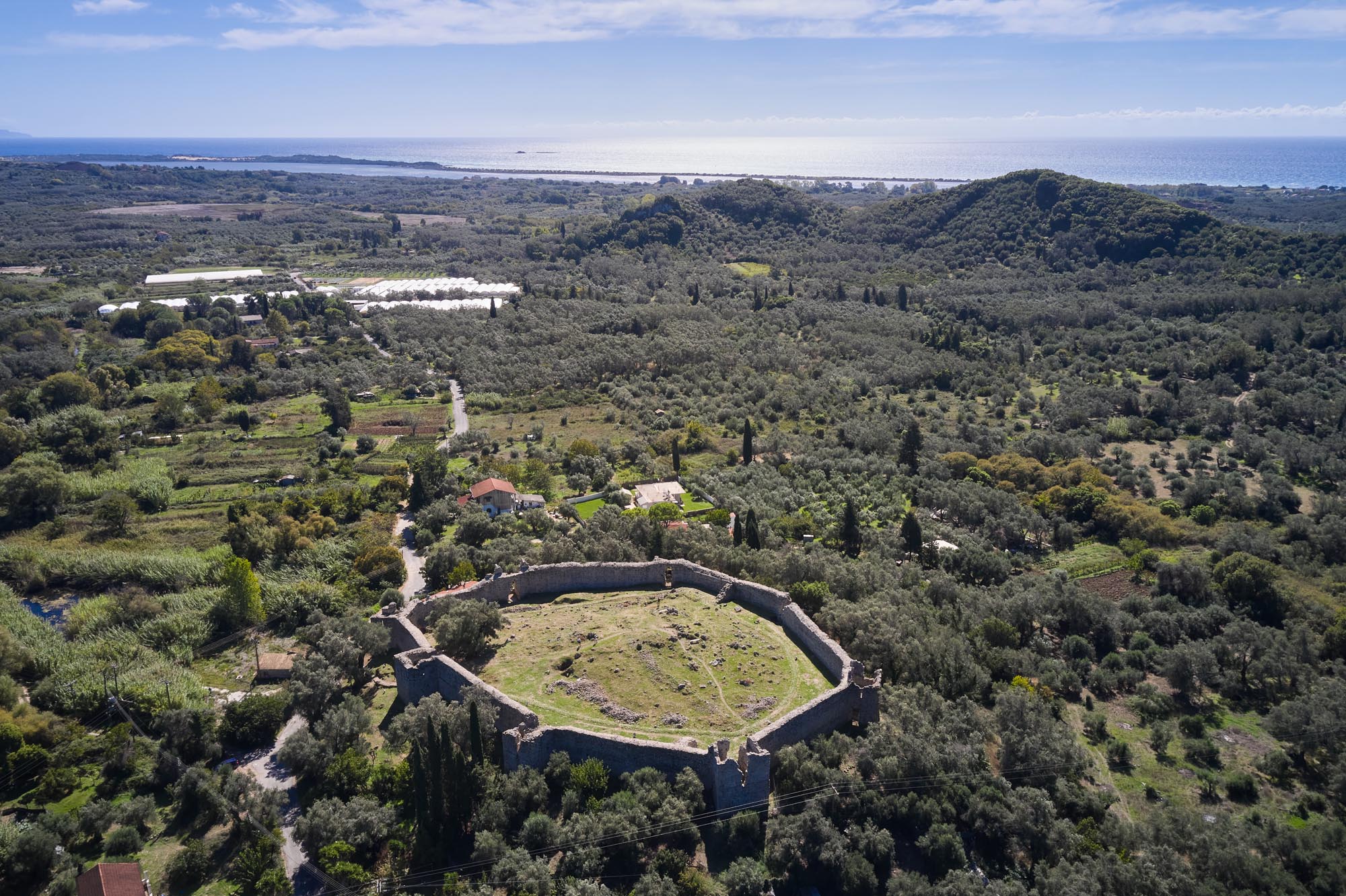
Gardiki
Built southwest of Corfu town, Gardiki is one of the three surviving Byzantine castles of the island’s countryside, along with those of Kassiopi and Aggelokastro. Its location is likely to have been chosen to protect the spring of the same name, other neighbouring water sources and the adjacent Korissia Lagoon.
ΑΠΟ ΤΟ ΠΑΡΕΛΘΟΝ ΣΤΟ ΠΑΡΟΝ
Work within the castle revealed a 6th-century BCE burial, along with burials from the Late Roman–Early Byzantine period, indicating the area’s continuous use since antiquity.
The construction of Gardiki Castle, for which no testimonies survive in written sources, is dated probably to the early 13th century. According to the prevailing view, the castle was built after 1214, during the period when the island belonged to the independent state of Epirus, more widely known as the Despotate of Epirus. The construction of three castles in the countryside of Corfu has also been associated with the strengthening of the island’s defenses by Emperor Manuel I Komnenos after 1149 and the conquest of Corfu by the Normans. About two centuries later, in 1386, the castle was abandoned when the Venetians occupied Corfu.
THE CASTLE
The castle walls follow an octagonal ground plan, enclosing an area of approximately 0.5 hectares. Eight two-storey rectangular towers intermittently reinforce them. The castle retains the fortification and building characteristics of the Byzantine period while its masonry incorporates reused ancient building material.
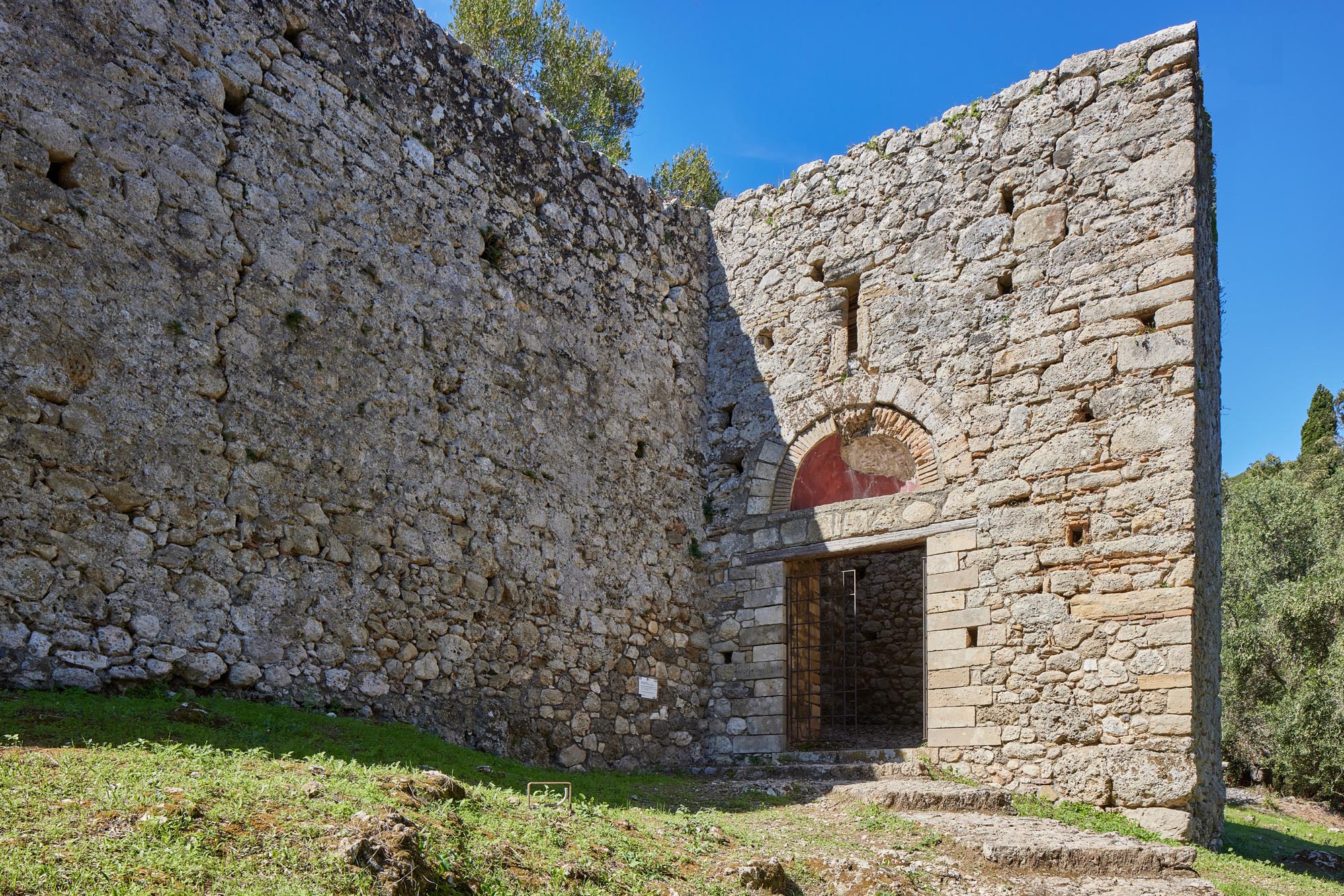
The central gate, featuring an arched lintel, is set in a northeastern tower, while three other towers contain secondary postern gates.
No buildings have been preserved inside the castle apart from the remains of a lime kiln. However, traces of wall paintings on the upper floor of the tower southwest of the main gate suggest that the space once served as a chapel.