
Anthousa
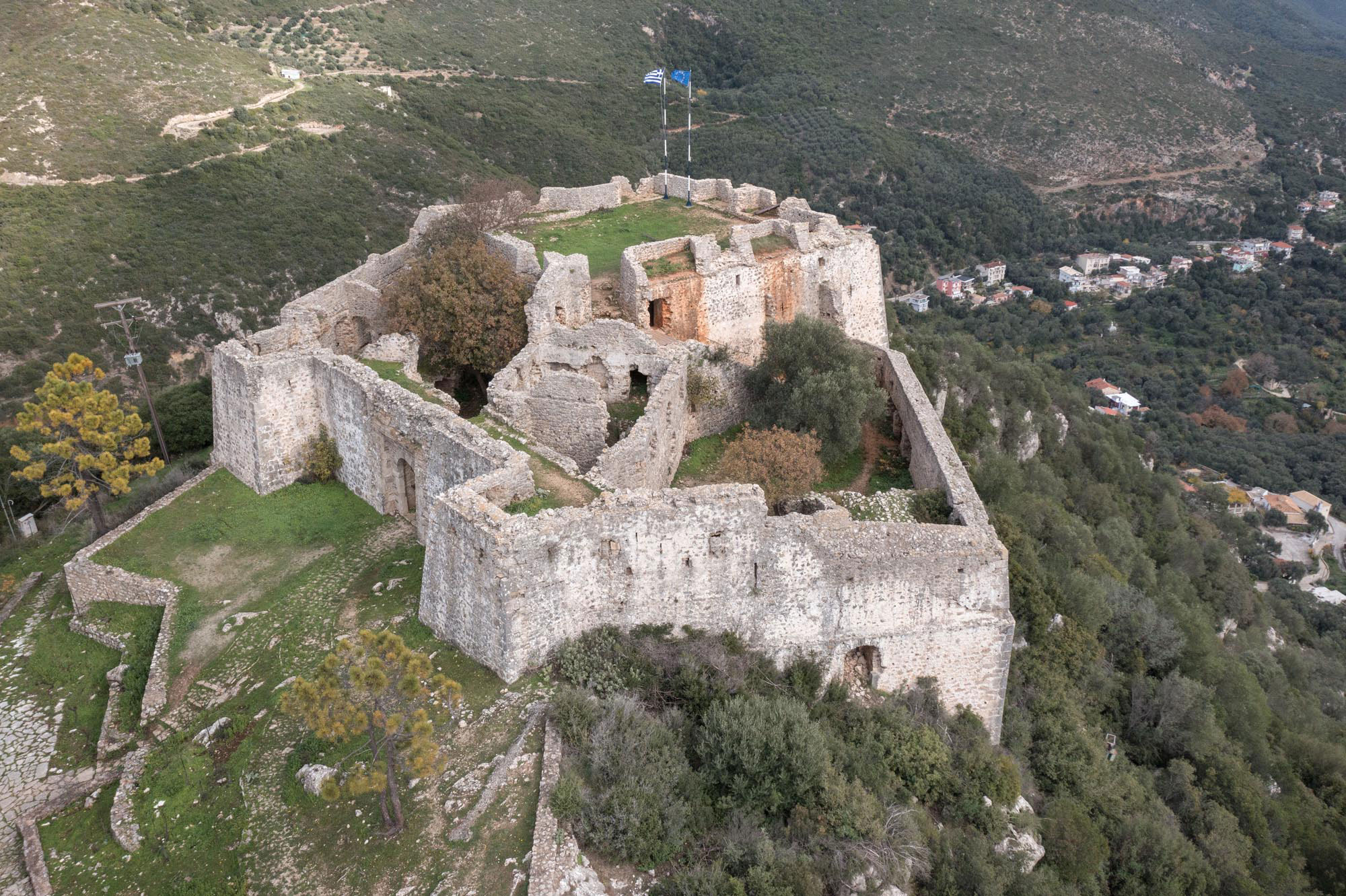
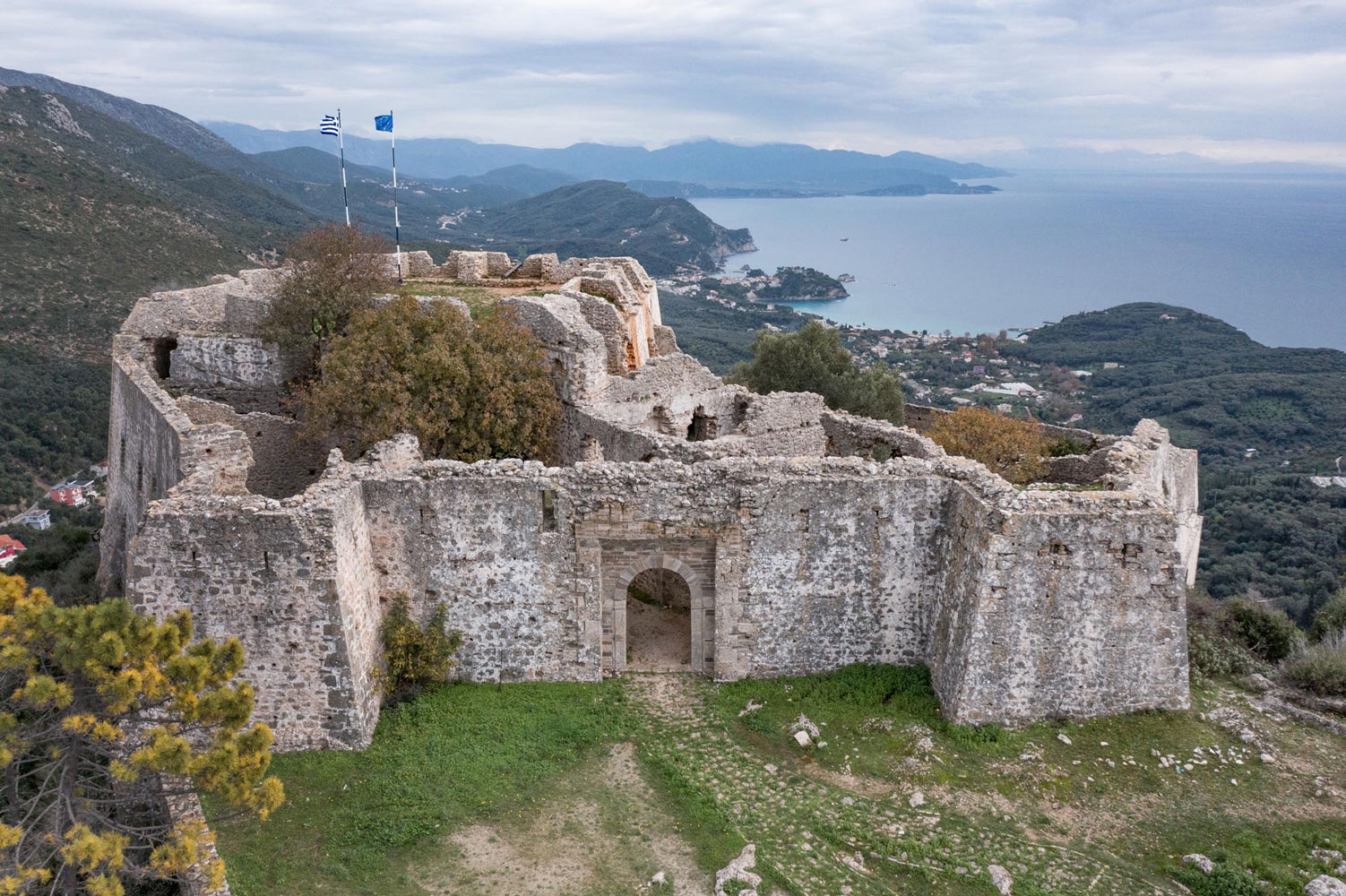
Anthousa Castle lies a short distance from the settlements of Anthousa and Agia. It dominates a distinctive hill between the sea and the mountains of Thesprotia surrounding Parga. The location is naturally fortified with steep slopes, and can be accessed from the northwest.
ΑΠΟ ΤΟ ΠΑΡΕΛΘΟΝ ΣΤΟ ΠΑΡΟΝ
Ali Pasha of Ioannina built the fortress in 1814 with the aim of conquering Parga, the only area on the mainland not part his pashalik as it was under French and Napoleon’s control since 1807. In 1814, with developments in Europe and Napoleon’s imminent defeat, Ali Pasha openly turned his attention to Parga. Initially, he attacked and looted Agia but was repelled from the city. Consequently, he organised a siege by constructing a number of forts in the area, of which Anthousa Castle is the only one to survive. The new castle posed a direct threat, providing full surveillance of the movements of the defenders of the coastal city, who, in the meantime, had requested and obtained protection and a garrison from the British. In 1817, the British agreed to ceded Parga to the Ottomans for a sum of money. In 1819, they handed it over to Ali Pasha, resulting in Anthousa Castle losing its strategic significance just five years after its construction.
The Italian engineer Don Santo di Monteleone is credited with designing the castle. However, just two years after its construction, significant static problems were noted, which required repairs and modifications.
THE FORTRESS
The fortress’ monumental central gate opens to the west, protected by two towers to the north and south. This side of the castle has gun loops but no strong artillery fortifications. A postern gate on the south side seems to have functioned as an auxiliary exit.
From the main gate, two paths lead into the fortress. The first, to the south, passes through a vaulted corridor to the southern inner courtyard, where a small, vaulted building, identified as a gunpowder storeroom, is located. From the same corridor, an arched opening provides access to an inclined passage leading to the upper level of the enclosure.
To the north, the second path leads directly from the main gate to a smaller inner courtyard containing two two-storey buildings. The northernmost building, abutting the enclosure, includes an underground cistern, a square shaft for drawing water that extends from the ground floor to the second floor and small rooms on the floors. The southernmost building, likely a later addition, also contains rooms on the ground and first floors.
The castle’s firepower is concentrated in the imposing bastion-tower to the east, facing Parga. Standing approximately 15 m tall, it provides a commanding view of the wider area. The ground floor of the tower was accessible through three entrances: one opposite the main gate, a smaller one to the north on the same side and another leading to the south courtyard. At the upper level, there are positions only for gun batteries facing Parga, which lay within range at a distance of 1,200 m and at a lower elevation.