
Aktio
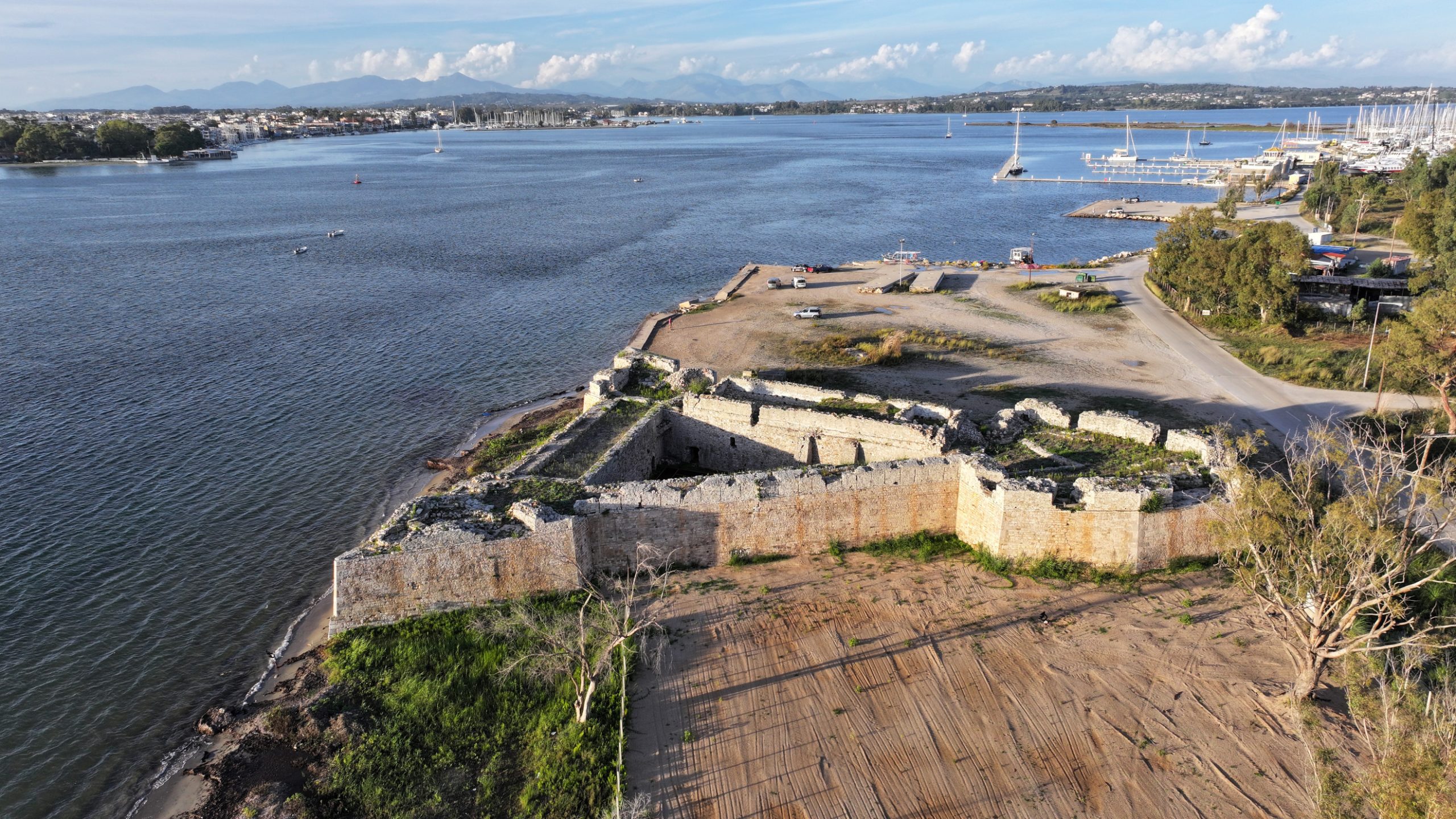
The coastal military fortress of Aktio was built on the Acarnanian coast, opposite Preveza, in the area where the naval battle between Mark Antony and Octavian took place in 31 BCE. It was strategically located to control both the sea passage and the land routes leading to the Acarnanian interior. Built in the early 19th century, the fortress formed part of the fortification network established by Ali Pasha along the Ionian and Adriatic coasts to ensure both control of the region against European powers and to strengthen his image in the eyes of the Ottoman administration as a powerful pasha safeguarding the borders of the Ottoman Empire.
ΑΠΟ ΤΟ ΠΑΡΕΛΘΟΝ ΣΤΟ ΠΑΡΟΝ
Travel accounts indicate that the construction of the fortress began at the end of the 18th century (ca. 1794/96), while according to letters from the fortifications supervisor in Preveza and Aktio, a moat was dug in 1807. The fortress was completed in September 1812, as documented by two inscriptions, one made of ceramic elements and the other in stone relief, at the main gate. It was taken over by the Greek state in 1881, remaining in military use until World War II.
The fortress
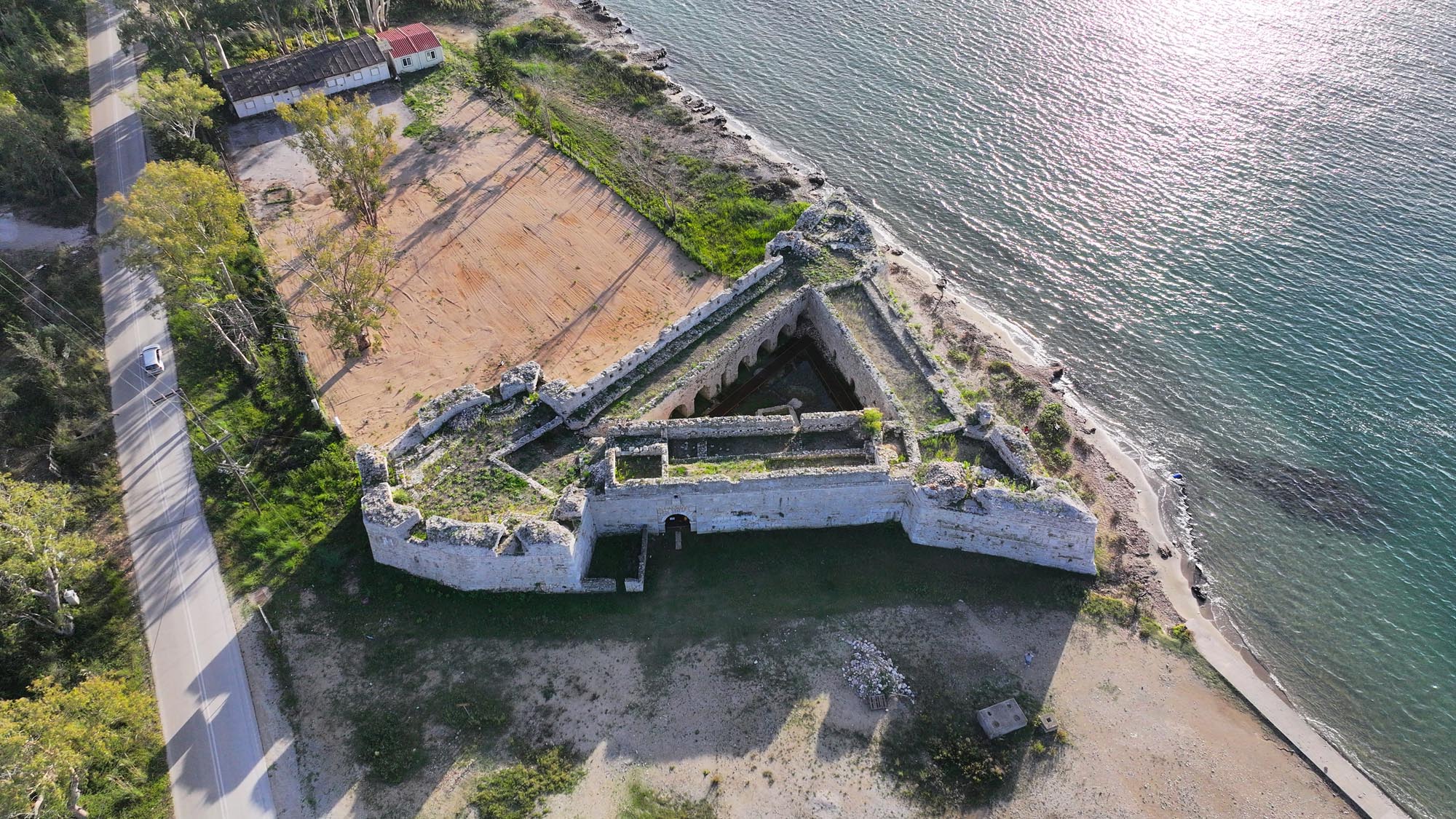
The fortress is small, with an almost isosceles triangle ground plan, making it unique in Greece. It can only be compared to the fortress of Porto Palermo, near Himarë, Albania, which was also built by Ali Pasha in 1804.
One side of the fortress runs parallel to the sea, forming a powerful front facing Preveza, while the other two converge eastwards, towards the Acarnanian interior. Three massive bastions at the corners of the triangle strengthen the fortress’ defences, with the most powerful overlooking the Acarnanian side. The bastions are connected by a wide rampart-walk and form a terrace with cannon embrasures on their upper level. Stones from ancient buildings were repurposed in the construction of the fortress.
The main gate of the fortress is located on its northern side and leads to the interior via a vaulted corridor. An escape postern gate opens to the sea side. Inside, a triangular courtyard is surrounded by a series of vaulted rooms used to support the fortress’ operations and house the garrison (including cisterns, fireplaces, etc.). The rooms on the southern side are open or semi-open, while those on the northern and eastern sides are enclosed. In the centre of the courtyard, architectural remains of a later rectangular building can be seen. A built ramp provided access from the courtyard to the rampart-walk of the walls, which reach 6.5 m in height. Ali Pasha’s saray was located on the rampart-walk on the northern side of the fortress.
The Ephorate of Antiquities of Aetolia-Acarnania and Lefkada has carried out restoration and enhancement work on the castle.