
Margariti
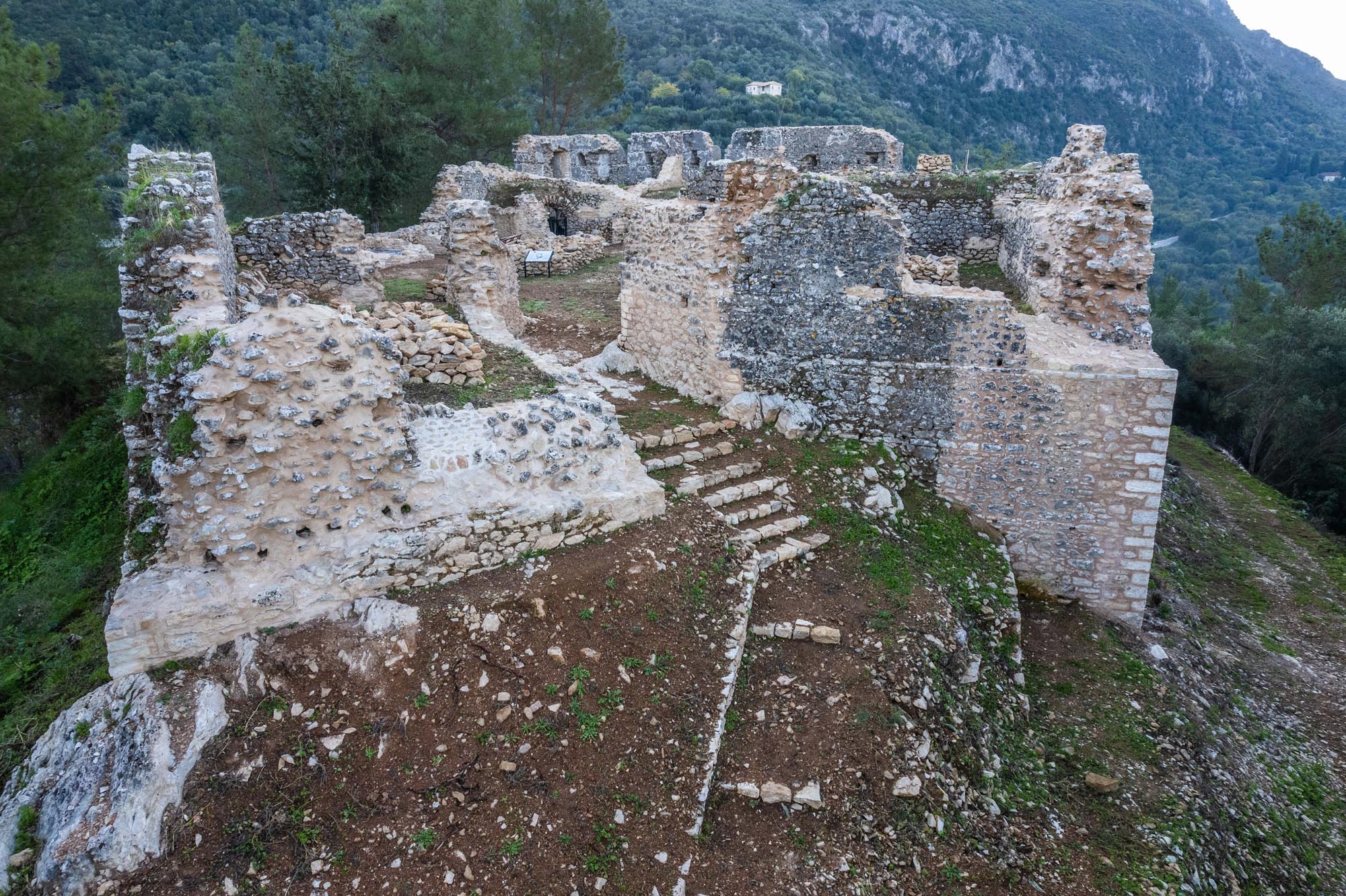
A small fortress, Margariti Castle is situated on a low hill south of the modern settlement, 27 km from Igoumenitsa. The Ottomans built it around 1549 to strengthen their positions against the Venetians, who controlled the coast and the city of Parga at the time.
ΑΠΟ ΤΟ ΠΑΡΕΛΘΟΝ ΣΤΟ ΠΑΡΟΝ
In 1571, an allied force of Venetians, Corfiots and soldiers from Parga and Paramythia, led by Paolo Orsini, occupied and destroyed the castle in retaliation for the Margariti garrison’s attacks on Parga. After the peace treaty of 1573, Parga stayed under Venetian control, while Margariti remained in the hands of the Ottomans, who subsequently reconstructed it.
In the 17th century, the castle continued to play an important role in controlling the area. In 1669, records indicate that it had a garrison of 40 to 50 janissaries and eight artillerymen, while the Ottoman traveller Evliya Çelebi, who visited it in 1670–1671, described it as a large pentagonal castle with a garrison of 200 men, although his account is likely exaggerated.
In the 18th and early 19th centuries, the powerful local family of Suleiman Tsaparis controlled the castle. During this period, it became a hub of anti-government activity and uprisings against the Ottoman Porte.
In 1811, the castle came under the control of Ali Pasha of Ioannina and remained involved in the region’s ongoing armed conflicts. Until the incorporation of the region into the Greek state in 1913, Margariti was in continuous use, serving as Ottoman barracks, the headquarters of the local military commander and a prison.
The local Ephorate of Antiquities has undertaken restoration and enhancement works at the castle.
THE CASTLE
The small Ottoman castle took its present form after extensive reconstructions in the late 17th or early 18th century. It was designed following the model of military residences developed around a central courtyard, while reflecting local experience and tradition, mainly expressed in the choice of rough terrain and prominent location.
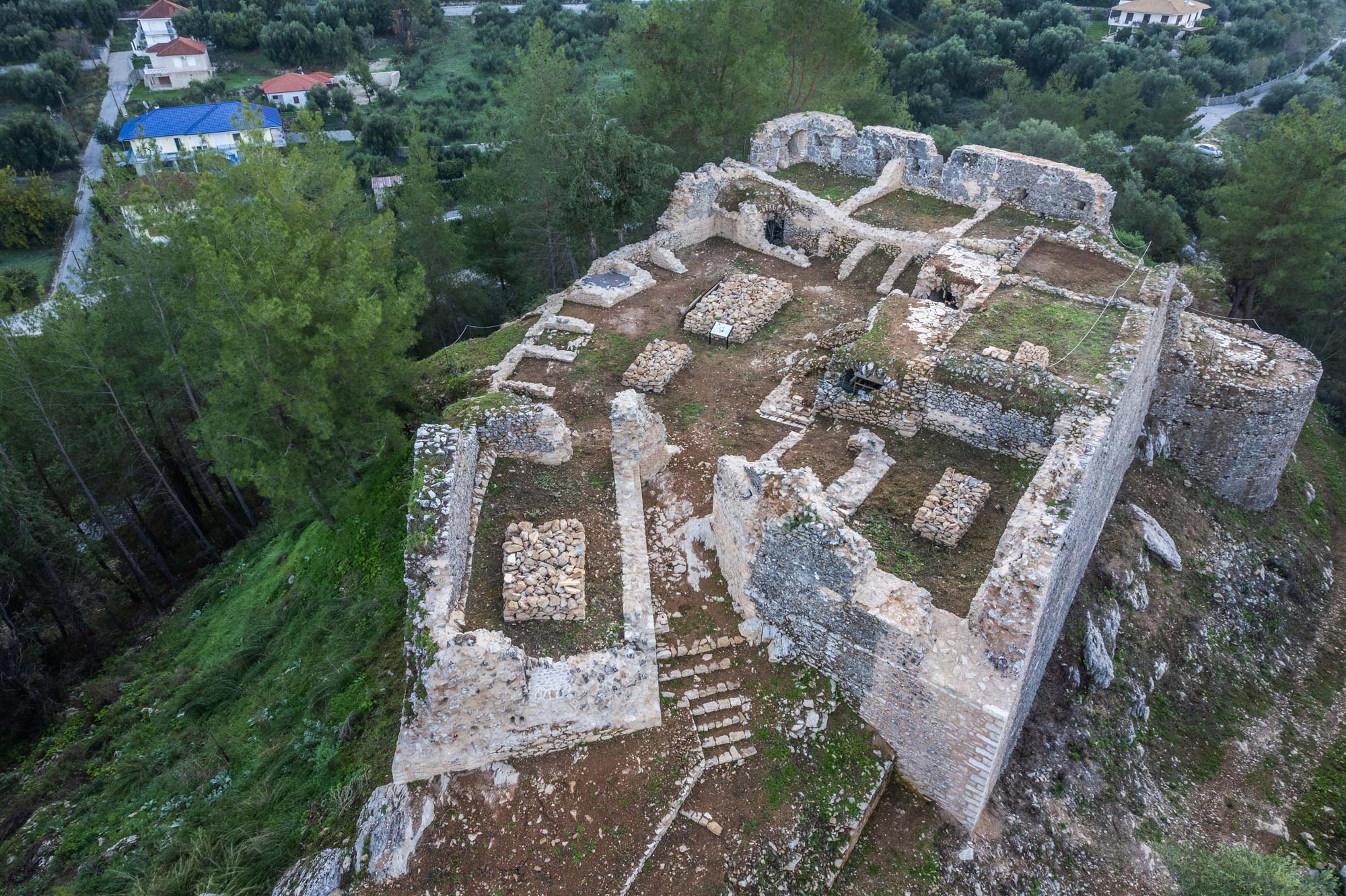
The castle features an irregular pentagonal layout, with robust walls enclosing an area of 890 sq.m. Its defences were reinforced with a large trapezoidal tower to the northeast and a semicircular tower to the southwest. In addition, another tower-like structure to the north protected the castle gate.
This gate was arched and stood more than 5 m above the surrounding external area, suggesting that access to the castle was likely facilitated by either a movable wooden staircase or through a sloping ramp; however, this remains uncertain. The gate led to the inner courtyard, which is roughly rectangular in shape, with maximum dimensions of 16m by 10m.
THE INTERIOR
Around the inner courtyard, the castle’s spaces were arranged on two levels. The ground floor included cisterns and a bath in the west wing, a latrine in the east and another vaulted storage room in the southeast corner. The upper floor, accessible from the west wing via a wooden staircase supported by a stone base, included the garrison’s quarters. It featured arched windows, a fireplace and storage space, while gun loops and a machicolation provided defensive capabilities.